Monday, August 21, 2006


CHAPTER V, BOOK IV,


OF HOLY PATIENCE


He who with steadfast humility and patience endureth tribulations for the fervent love of God, shall soon attain to great graces and virtues; he shall be lord of this world, and shall have an earnest of that glorious world which is to come.

Everything which a man doth, be it good or evil, he doeth it unto himself. Therefore, be not thou offended with him who injures thee, but rather, in humble patience, sorrow only for his sin, having compassion on him, and praying fervently for him to God. For, in so far as a man is strong to suffer and endure injuries and tribulations patiently for the love of God, so great, and no greater, is he before God; and the weaker a man is to endure sufferings and adversities for the love of God, the less is he in the sight of God.

If any man praise thee, speaking well of thee, render thou that praise unto God alone; and if any man reproach thee, speaking evil of thee, do thou help him by speaking of thyself still worse.

If thou wouldst maintain thine own cause, strive to make it appear evil, and maintain that of thy companion good, ever accusing thyself and sincerely excusing thy neighbour. When anyone strives and contends with thee, if thou wouldst conquer, lose thy case, and losing it thou shalt conquer; for if thou wilt go to law to obtain the victory, when thou believest thou hast obtained it, thou shalt find thyself shamefully defeated. Wherefore, my brother, believe me assuredly that the certain way to gain is to lose. But if we endure not tribulation well, we shall never attain to consolation eternal. It is a meritorious thing and far more blessed to endure injuries and reproaches patiently, without murmuring, for the love of God, than to feed a hundred poor men, or to keep a perpetual fast. But what profits it a man, or how does it benefit him, to afflict his body with many fasts, vigils and disciplines, if he cannot endure a little injury from his neighbour? And yet from this might he derive greater reward and higher merit than from all the sufferings he could inflict upon himself of his own will; for to endure reproaches and injuries from our neighbour with humble and uncomplaining patience, will purge away our sins more speedily than they could be by a fountain of many tears.

Blessed is the man who has ever before the eyes of his mind the remembrance of his sins and of the favours of God; for he will endure with patience all tribulations and adversities for which he expects so great consolation. The man who is truly humble looketh for no reward from God, but endeavours only to satisfy him in all things, knowing himself to be his debtor; every good thing which he hath he acknowledges to come from the free bounty of God, while every evil that befalleth him proceedeth from his sins alone.

A friar once said to Brother Giles: “Father, what shall we do if some great adversity or tribulation befall us in these times?” To whom Brother Giles replied: “My brother, I would have thee to know, that if we be such as we ought to be, though the Lord should rain down stones and lightening from heaven, they could not harm or injure us; because, if a man be in truth such as he ought to be, every evil and tribulation will be turned to his good; for we know how the Apostle saith, that all things shall be turned to good for them that love God; and in like manner all things shall turn to the condemnation and punishment of the man of evil will.

“If thou wouldst be saved and attain to eternal glory, desire not revenge, nor punishment of any creature; for the inheritance of the saints is ever to do good and to receive evil. If thou didst but know, indeed, how much and how grievously thou hast offended thy Creator, thou wouldst know that it is meet and right that all creatures should persecute thee, inflicting pain and sorrow upon thee, that so the offenses which thou hast offered to their Creator might be avenged.

“It is great and high virtue for a man to overcome himself; for he who overcometh himself shall overcome all his enemies and persevere in all good. But still greater virtue would it be if a man suffer himself to be overcome by all other men, for thus would he become victor over all his enemies, to wit, sin, the devil, the world and his own flesh. If thou wilt be saved, renounce and despise every consolation which all the things of this world and all mortal creatures can give thee, because greater and more frequent are the falls which arise from prosperity and consolation than those which come from adversity and tribulation.”

A certain Religious once complained of his superior in the presence of Brother Giles, because of a severe obedience which he had received from him; to whom Brother Giles made answer: “Dearest brother, the more thou complainest, the heavier dost thou make thy burden, and the harder will it be to carry; but the more humbly and devoutly thou submittest thy neck to the yoke of holy obedience, the sweeter and the lighter will that yoke be to bear. But it seems to me that thou art not willing to bear reproach in this world for the love of Christ, and yet desirest in the next world to be with Christ; thou art not willing in this world to be persecuted and evil spoken of for Christ, yet in the other world thou wouldst fain be blessed and welcomed by Christ; thou willest not to labour in this world, and thou wouldst repose and take thy rest in the other. Brother, brother! I tell thee that thou dost grievously deceive thyself, for it is by the way of shame, humiliation and reproach that a man attaineth to true celestial glory; and by patiently enduring derision and contumely for the love of Christ, doth a man attain to the glory of Christ. For the worldly proverb saith well: ‘He who gives not what costs him something, shall not receive that which he desires.’

“The horse is a noble and useful creature; for in his swiftest course he suffers himself to be ruled, guided, and turned hither and thither, backwards and forwards, according to the will of the rider; so likewise should it be with the servant of God, who should suffer himself to be ruled, guided, turned and bent, according to the will of his superior; nay, of all others, for the love of Christ.

“If thou wilt be perfect, strive earnestly to be virtuous and gracious, fighting valiantly against all vices, and bearing patiently all adversities, for the love of thy Lord, who was troubled, afflicted, reproached, beaten, crucified and slain for thy love, and not for his own fault, nor for his own glory, nor for his own profit, but only for thy salvation. And to the end that thou mayest do this which I say, it is needful above all that thou overcome thyself; for little will it profit thee to lead and draw other souls to God, if thou be not first drawn and led to him thyself.”

[Public Domain.]


Sunday, August 20, 2006


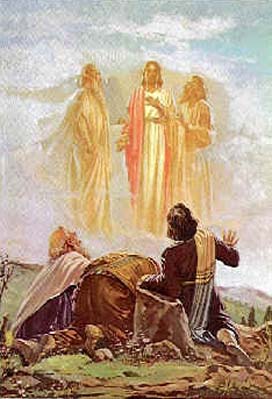
TRANSFIGURATION

CHAPTER IV, BOOK IV,

'LITTLE FLOWERS'


OF THE HOLY FEAR OF GOD


He who fears not, shows that he has nothing to lose. The holy fear of God orders, governs, and rules the soul, and prepares it to receive his grace.

If a man possesses any grace or any divine virtue, it is holy fear which preserves it to him. And he who has not yet acquired grace or virtue, acquires it by holy fear.

The holy fear of God is a channel of divine grace, inasmuch as it quickly leads the soul wherein it dwells to the attainment of holiness and all divine graces. No creature that ever fell into sin would have so fallen had it possessed the holy fear of God. But this holy gift of fear is given only to the perfect, because the more perfect any man is, the more timorous and humble he is.

Blessed is the man who looks upon this world as his prisonhouse, and bears in mind continually how grievously he has offended his Lord.

Greatly ought a man to fear pride, lest it should give him a sudden thrust, and cause him to fall from the state of grace in which he is; for no man is ever secure from falling, so beset are we by foes; and these foes are the flatteries of this wretched world and of our own flesh, which, together with the devil, is the unrelenting enemy of our soul. A man has greater reason to fear being deluded and overcome by his own malice than by any other enemy. It is impossible for a man to attain to any divine grace or virtue, or to preserve therein, without holy fear.

He who has not the fear of God within him is in great danger of eternal perdition. The fear of God makes a man to obey humbly and to bow his head beneath the yoke of obedience: and the more a man fears God, the more frequently he adores him.

The gift of prayer is no small gift, to whomsoever it is given.

The virtuous actions of men, how great soever they may seem to us, are not to be reckoned or rewarded after our judgment, but according to the judgment and good pleasure of God; for God looketh not to the number of works, but to the measure of humility and love. Our surest way, therefore, is always to love and to keep ourselves in humility; and never to trust in ourselves that we do any good, but always to distrust the thoughts which spring up in our own mind under the appearance of good.

[Public Domain.]


Saturday, August 19, 2006


CHAPTER III, BOOK IV,


OF HOLY HUMILITY


No man can attain to any knowledge or understanding of God but by the virtue of holy humility; for the direct way to ascend is first to descend. All the perils and grievous falls which have happened in this world have arisen from nothing else but the uplifting of the head - that is, of the mind - by pride. This is proved by the fall of the devil, who was driven out of heaven; and by that of Adam, our first parent, who was banished from paradise by the uplifting of his head - that is, by disobedience. We see it also in the example of the Pharisee, of whom Christ speaketh in the Gospel, and in many others also.

And so also the contrary truth - namely, that all the great blessings which have ever been bestowed upon the world have proceeded from abasement of the head, that is, from the humiliation of the mind - is proved by example of the blessed and most humble Virgin Mary, the publican, the good thief on the cross and many others in Holy Scripture. And, therefore, good it were if we could find some great and heavy weight, which, being tied round our neck, would draw us down to the earth, and force us to humble ourselves.

A friar once said to Brother Giles: “Father, tell me, how can we avoid this pride?” To whom Brother Giles made this reply: “Rest assured, my brother, that thou canst never hope to be free from pride until thou hast first placed thy mouth where thou dost set thy feet; but if thou wilt well consider the gifts of God, thou wilt clearly see that thou hast reason to bow down thy head. And again, if thou wilt meditate on thy defects and thy manifold offenses against God, in all this thou wilt find reasons for humbling thyself. But woe to those who desire to be honoured in their unworthiness! He hath one degree of humility, who knoweth himself to be opposed to his own true good. He hath a second, who restoreth the goods of another to their proper owner, and doth not appropriate them to himself. For every virtue and every good thing which a man findeth in himself, instead of appropriating it to himself, he is bound to refer to God, from whom all graces and all good things do proceed. But every sinful passion of the soul, and every vice which a man findeth within himself, he should attribute to himself, considering that they all proceed from himself and his own malice, and from no other source. “Blessed is the man who knows and accounts himself to be vile in the eyes of God, and also in the sight of men.

“Blessed is he who judges himself always and condemns himself, and none but himself; for he shall not be condemned in that last and terrible eternal judgment.

“Blessed is he who shall submit himself wholly to the yoke of obedience and the judgment of others, as the holy Apostles before and after they received the Holy Spirit.”

Brother Giles said also: “Let him who would acquire and possess perfect peace and quiet of mind account every man his superior, and hold himself the inferior and subject to all.

“Blessed is the man who, in his works and in his words, desires neither to be seen nor known for anything else but for that wherewith God hath adorned him.

“Blessed is the man who knows how to keep and hide within his heart divine revelations and consolations; for there is nothing so secret but God can reveal it when it pleaseth him. If the most holy and perfect man in the world were to esteem and account himself to be the vilest and most miserable sinner in the world, this would be true humility.

“Holy humility loves not to talk, nor the holy fear of God to use many words.”

Brother Giles said again: “It seems to me that holy humility is like the thunderbolt; for, even as the thunderbolt striketh a terrible blow, crushing, breaking, and burning that whereon it lights, yet can we never find the thunderbolt itself, so does humility strike and disperse, burn up and consume every evil and vice and sin, and yet itself can nowhere be seen.

“He who possesses humility, by that humility finds grace with God, and perfect peace with his neighbour.”

[Public Domain.]

Friday, August 18, 2006


CHAPTER II, BOOK IV,


OF FAITH


All those things which can be thought with the heart, or spoken with the tongue, or seen with the eyes, or felt with the hands, are as nothing in comparison with those which we can neither think, nor see, nor touch. All the saints and wise men who have passed away, and all those who are now in this present life, and all those who shall come after us, - all those who have spoken or written, or shall speak or write of God, - shall never be able to show forth so much of him as a grain of millet in comparison with the whole extent of heaven and earth; nay, a thousand thousand times less. For all that is written of God is but as the lisping prattle of a mother to her babe, who could not understand her words did she speak after any other manner.

Brother Giles said once to a secular judge: “Dost thou believe that the gifts of God are great?” And the judge said: “I believe it.” To which Brother Giles replied: “I will show thee that thou dost not truly believe it.” And then he said to him: “What is the value of thy worldly possessions?” The judge answered: “Perhaps about a thousand pounds.” Then Brother Giles said: “Wouldst thou give this property to thine for ten thousand pounds?” The judge answered, with hesitation: “Assuredly, I would do so willingly.” Then Brother Giles said: “It is a thing most certain that all the possessions of this world are nothing worth in comparison with heavenly things; wherefore, then, givest thou not these possessions of thine to Christ, that thou mayst purchase riches celestial and eternal?” Then the judge, being wise with the foolish wisdom of the world, made answer to the pure and simple Brother Giles: “Dost thou believe, Brother Giles, that there is any man whose outward acts accord perfectly with the measure of his internal belief?” Brother Giles replied: “Listen, my beloved: it is most certain that all the saints have truly striven to carry into effect, to the utmost extent of their power, all that they knew and understood to be the will of God; and those things which they were unable to effect in external act, they fulfilled by the holy desire of their will, which supplied their defect of power to perform the action.” Said Brother Giles again: “If any man had perfect faith, he would soon arrive at perfection, and attain to a full assurance of his salvation. What harm or what injury could any temporal adversity in this present life do to the man who, with firm faith, looketh forward to that eternal and supreme and most perfect blessedness? And what can any prosperity, or temporal good in this world avail the wretched man who looketh forward to eternal woe! Nevertheless, let no man, how sinful soever he be, despair, so long as he liveth, of the infinite mercy of God; inasmuch as there is not a tree in the world so twisted and knotted and gnarled but may be fashioned and polished and beautiful by the hand of man; so likewise there is no man in this world so wicked and so sinful but God can convert him, and adorn him with singular graces and many gifts of virtue.”

[Public Domain.]


Thursday, August 17, 2006


VIRTUE TREE


PART FOUR


HERE BEGIN THE CHAPTERS OF CERTAIN

INSTRUCTIONS AND NOTABLE SAYINGS

OF BROTHER GILES


Chapter I, BOOK FOUR,

Of vices and virtues


The grace of God and the virtues which flow therefrom are a way and a ladder that leadeth to heaven; but vices and sins are a ladder and a way that leadeth to the depths of hell. Vices and sins are a venomous and a mortal poison, but virtues and good works are a salutary medicine. One grace leadeth on to another; and one vice leadeth on to another. Grace asketh not to be praised, and vice cannot endure to be despised. The mind reposeth tranquilly in humility, of whom patience is daughter. Holy purity of heart seeth God, and true devotion enjoyeth him.

If thou lovest, thou shalt be loved.

If thou servest, thou shalt be served.

If thou fearest, thou shalt be feared.

If thou doest good to others, fitting it is that others should do good unto thee.

But blessed is he who truly loves, and desireth not to be loved again.

Blessed is he who serves, and desireth not to be served.

Blessed is he who doeth good to others, and desireth not that others should do good to him.

But because these things are most sublime and high perfection, therefore they that are foolish cannot understand them nor attain thereto. Three things there are that are very sublime and very profitable, which he who has once acquired shall never fail.

The first is, that thou bear willingly and gladly, for the love of Jesus Christ, every affliction that shall befall thee.

The second is, that thou humble thyself daily in every thing thou doest, and in every thing thou seest.

The third is, that thou love faithfully with all thy heart that invisible and supreme Good which thou canst not behold with thy bodily eyes.

Those things which are most despised and decried by worldly men are most truly pleasing and acceptable to God and to his saints; and those things which are most loved and esteemed, and are most pleasing in the eyes of worldly men, are most despised, condemned, and hated by God and by his saints.

This foul disorder proceedeth from human ignorance and malice; for wretched man loveth most those things which he ought to hate, and hateth those which he ought to love.

Said Brother Giles one day to another friar, “Tell me, dearest brother, is thine a good soul?” and the brother answered: “I know not.” Then said Brother Giles: “My brother, I would have thee to know that the things which make a soul good and blessed are holy contrition, holy humility, holy charity, holy devotion, and holy joy.”

[Public Domain.]

Wednesday, August 16, 2006


CHAPTER X, PART III,

'LITTLE FLOWERS'


HOW GOD GAVE SPECIAL GRACES TO BROTHER GILES, AND OF THE YEAR OF HIS DEATH


Brother Bonaventura of Bagnoreggio said of Brother Giles, that God had given him special graces, not only for himself, but for all those also who should recommend themselves to him with a devout intention in any spiritual need. He wrought many miracles, both in his lifetime and after his death, as appeareth by his legend, and he passed from this life on the Feast of St George, in the year 1252. He is buried at Perugia in the convent of the Friars Minor.

[Public Domain.]

Tuesday, August 15, 2006


CHAPTER IX, PART III,

'LITTLE FLOWERS'


HOW, BY THE MERITS OF BROTHER GILES, THE SOUL OF THE FRIEND OF A FRIAR PREACHER WAS DELIVERED FROM THE PAINS OF PURGATORY


While Brother Giles was lying sick, a few days before his death, a certain friar of St Dominic became sick unto death. Another friar, who was a friend of his, said to the sick brother: “My brother, I desire, if God permit, that after thy death thou return to me and tell me in what state thou art”; and the sick man promised to return if it should be possible. He died on the same day with Brother Giles, and after his death, he appeared to the living Friar Preacher, and said: “It is the will of God that I should fulfill my promise.” Then said the living man to the dead: “How is it with thee?” and the dead answered: “All is well; for I died on the very day that a holy Friar Minor, named Giles, passed from this life; to whom for his great sanctity Christ granted that he should carry with him to holy Paradise all the souls that were in Purgatory, among whom was I suffering great torment; and now, by the merits of the holy Brother Giles, I am delivered from them”; and having said this, he forthwith disappeared; and that friar revealed the vision to no man. But after a time this same friar fell sick, and immediately suspecting that God had struck him because he had not revealed the virtue and the glory of Brother Giles, he sent for the Friars Minor; and there came to him ten, two by two; and they being gathered together with the Friars Preachers, he declared to them with great devotion the aforesaid vision; and, diligent inquiry having been made, it was found that the two had indeed passed from this life on one and the same day.

[Public Domain.]


THE ASSUMPTION OF THE BLESSED VIRGIN MARY

In 1950, on the Feast of All Saints, Pope Pius XII announced to the throngs of people in St. Peter’s square: “We pronounce, declare and define to be divinely revealed the dogma that the Immaculate Mother of God, the Ever-Virgin Mary, was, on the completion of her earthly life, assumed body and soul into the glory of Heaven.”

Happy hour and happy homecoming! Mary, we rejoice with you. We who still wander in this world, we who are weak and weary and all too worldly, we, however, who love to call you Mother, who count upon your motherly protection, we, your children still upon this place of trial, we rejoice with you and with the angels and Saints and with the Blessed Trinity.


Now we have a Mother in Heaven to look after us, a Mother most loving and powerful. As with all your other joys, small as well as great, your going home to be with Jesus, your divine Son, makes us happy. It makes those in Heaven happy; it makes the Heaven-hungry happy too.
Though bodily Mary was taken away from her children on earth, though bodily she seems far away, yet her leaving our planet must not make us lonesome. Rather, her Assumption should be to us a promise and an earnest of our own final glory with her. Her victory will be our victory.
Until that day of triumph we will struggle on, knowing that Our Mother is waiting and watching for us.

Who minds the discomforts and weariness of travel when he or she is going home to mother? Who minds labor, who minds burdens, who minds delays, who minds sacrifices, when they are making their way to the place where mother lives? Military men and women, college students, anyone separated from their families, coming home, will put up with every kind of inconvenience knowing that sooner or later they will be there--with mother. That is how we feel about traveling on the roads of time, looking forward to meeting our heavenly Mother. Jesus and Mary are waiting to welcome us, waiting to receive us among the happy inhabitants of that heavenly home, waiting to reward us for the smallest service. What joy that stirs up in our hearts!

Look down, O Mother Mary, look down from the heights of thy glory, look down and be to us--and be to all--a loving and powerful Mother. Thank God for the joy that is yours today. Thank God for the happiness and hope it gives us to pray the prayer Christ Himself taught us, and then to salute thee ten times in the Rosary, with your favorite greeting, the Hail Mary, as we think of your being received into Heaven body and soul. Thank God everyone for this joyful Mother. Amen.


[Excerpts are from a sermon by Father Arthur Tonne, Didde Printing Co.]

Monday, August 14, 2006


FEAST DAY OF SAINT MAXIMILLIAN MARY KOLBE

In honor of this great Saint, priest and Martyr, who gave his life at Auschwitz, so that another man could live, I present this post today:

Spirit & Life
"The words I spoke to you are spirit and life." (Jn 6:63)
Human Life International e-Newsletter
Volume 01, Number 28 | Friday, August 11, 2006
...................... www.hli.org

The Man Who Stepped Out of Line

In this post-feminist age where men are still learning remedial masculinity, we have a model of manhood lived heroically which we would do well to emulate. In the early twentieth century Poland gave us that manly priest, John Paul II, but also his hero, Maximilian Kolbe, priest, missionary, spiritual father and martyr of brotherly love. St. Maximilian's feast day is August 14th, the vigil of his beloved Virgin Mary's Assumption and the day which commemorates the conquest of virile love over the totalitarian creeds of his generation.

As men, we could all learn a simple lesson from Maximilian Kolbe in a fundamental area of virtue: namely, chastity. Men today don't connect chastity with manliness because they are indoctrinated by a sexualized society against the sacrifice it requires. But chastity is the proof of a man's virtue, not its destruction. Whether it is pre-marital chastity to respect women, periodic abstinence in marriage to respect wives, or permanent celibate chastity for God's kingdom, a man must learn it or live in a state of perpetual adolescence. Indeed, even as a child Kolbe was asked by Our Lady to choose between a white crown of purity and a red crown of martyrdom, and he showed his penchant for magnanimous sacrifice by choosing both! Men will be chaste not just when women demand it of them but when they see it as a heroic way to prove their manhood, and Kolbe's example stands out for any of us who have eyes to see.

Upon this foundation of chastity St. Maximilian built a veritable kingdom for Christ. This kingdom was not the raw expression of ego that so many men flaunt but a kingdom of love to which he devoted his life and all his vital energies. He was not yet a priest when he formed an organization for the conversion of all Freemasons in the world—no minor project there. He then established the largest monastery of religious men in the world and gave them all the task of bringing souls to Christ. After that he learned Japanese and went there because he saw that the mainly un-Christianized Japanese had souls to save too and someone had to do it. He identified himself as that someone. Nor was he known to have ever accepted a benefit or privilege beyond what his men received, even when he was technically entitled to it as their superior. He ate with them, prayed with them, slept on the floor like them and then went to several Nazi prison camps with them. He was first but made himself the last and the servant of all. This was a man's man.

If the real identifying mark of a man is his ability to forgo his own desires for the good of others, then the sacrifice of one's life for another surely qualifies as the highest measure of manhood. This saint did not even know the man who lamented about the destitution of his wife and children if he would have died in that concentration camp, but Kolbe stepped out of line right then and there and took his place as if it never occurred to him that he had just agreed to the most horrible death imaginable, death by starvation, or to having his veins shot through with carbolic acid to finish off the devilish deed. His act of selflessness was so spontaneous that it seemed as just another sacrifice in his day, but in reality it was the ultimate sacrifice. "I'm just a priest," he told the Kommandant of the camp. "I'll go instead of him."

Will today's men learn from this man about manhood? Woe to us if we do not! In a world where feminist dogmas and intimidations shame men from living the heroism to which all of us are called, Kolbe beckons men to stand up, throw off this present totalitarianism and step out of line for those who need men most.


About the Author »

Help Spirit & Life with a Tax-Deductible Gift »

St. Maximilian Kolbe »

The Militia of the
Immaculata (MI)
»

Religious Life in the Spirit of St. Maximilian Kolbe »

SL archives »

Sincerely Yours in Christ,

Rev. Thomas J. Euteneuer,
President, Human Life International


CHAPTER VIII, PART III,

'LITTLE FLOWERS'


HOW A HOLY MAN, BEING IN PRAYER, SAW THE SOUL OF BROTHER GILES PASS TO ETERNAL LIFE


A holy man, who was praying when Brother Giles passed from this life, saw his soul, with a multitude of others newly freed from Purgatory, ascend into heaven; and he beheld Jesus Christ, with a multitude of angels, going to meet the soul of Brother Giles, and so ascending again with all those angels and blessed souls, and with the sound of a most ravishing melody, to heaven.

[Public Domain.]


Sunday, August 13, 2006


CHAPTER VII, PART III,

'LITTLE FLOWERS'


OF THE DAY OF THE HOLY BROTHER GILES’S DEATH


On the vigil of St George, at the hour of Matins, fifty-two years being now elapsed since he received the habit of St Francis, the soul of Brother Giles was received by God into the glory of Paradise: to wit, on the Feast of St George.

[Public Domain.]


REFUGE OF SINNERS

“For she is the brightness of eternal light and the unspotted mirror of God’s majesty, and the image of His goodness.” Wisdom 7:25.

I heard a story about a young mother taking her seven year-old daughter to a Passion Play during Lent. If you have seen the movie “The Passion of the Christ”, you know what a Passion Play is. During a tense moment in the Play when Judas was in despair after betraying Our Lord, he cries out:
“To whom shall I go? I am forsaken by everyone. Oh, to whom shall I go?”
The little girl was sitting on the edge of her seat, thinking everything was real. Turning to her mother at that very dramatic moment, she exclaimed in a clear voice heard throughout the audience:
“Mother, why doesn’t he go to Mary? She will help him, I know.”

“Out of the mouth of babes . . .” (Matt. 21: 16)

What the little girl said about Judas, the traitor, could be said to every one of us sinners: Why don’t we go to Mary? She will help us!

Mary, Our Mother, is the Refuge of Sinners; she has been called that for many centuries; she has proven herself to be the refuge of those who have offended Almighty God.

Today we celebrate this special Feast Day under the title, “Mary, Refuge of Sinners.” In the ’Old Testament’ we read about certain cities set up by the Israelites where men who were guilty of serious crimes, like murder, could find protection and safe refuge until their judge died and they were released from banishment. History also tells us that the Greeks and Romans and even Christianity had their cities of refuge.

In the Middle Ages there was the “right of sanctuary”, where men could find refuge in a church. This showing of mercy to criminals was not in itself a defiance of law and justice, it simply offered sanctuary and protection to those who had offended the law, but were being punished by vengeance. It prevented what we call a lynch mob, or taking the law into one’s own hands. There has been plenty of this horror throughout history, even here in the good old U.S.A.

Today we have the Heart of Our Blessed Mother as our refuge. To her we can fly for every need of repentance and sorrow and contrition and forgiveness.

1. Since Mary is the Mother of the Redeemer, the one Savior of all us sinners, we can expect her to be merciful to us sinners. Our Lady shared with Christ in the salvation of the world. From the crib at Bethlehem to the Cross on Calvary, Mary took part in the redemption as Co-redemptrix.
“Having suffered for the Church, Mary deserved to become the Mother of all the disciples of her Son, the Mother of their unity . . . In fact Mary’s role as Co-redemptrix did not cease with the glorification of her Son.” Pope John Paul II, 1985, Guayaquil, Ecuador.

Our Lady has Christ’s spirit of forgiveness and mercy, even to the worst offender. Now that she is in heaven, where her power is greater, where she is close to the throne of the Almighty, we can expect that she will continue to show this mercy upon us.

“Mary is powerful in heaven and on earth, and even those who are on the verge of despair she inspires with hope.” St. Peter Damian

2. Mary hates sin, but like Jesus, she loves the sinner, she loves the souls for whom Christ suffered and died, and she prays for us continually.
“There is no sinner so corrupt and sunk in vice that Mary will despise and reject him. If such a one seeks help with her, she will most certainly reconcile him with Jesus and obtain pardon for him.” St. Bonaventure.

3. There is another appeal in having a mother as a refuge. Sometimes out of fear children hesitate to go to their father, but every child runs to its mother. So we run to Mary, who is the Mother of God and our True Mother . I always said that if I found the front door to heaven closed, Mother Mary would open a back window for me to get in.

In this wacky and sinful world, where men are murdering each other, and God is betrayed through the disregard of His Commandments, why don’t we say what the little girl said about Judas:
“Why don’t he (they) go to Mary? She will help him (them), I know.” Amen.
[Adapted from a sermon by Father Arthur Tonne, Didde Printing Co.]

Saturday, August 12, 2006


CHAPTER VI, PART III,

'LITTLE FLOWERS'


HOW BROTHER GILES WAS MIRACULOUSLY ASSISTED IN A GREAT NECESSITY WHEN, BY REASON OF A HEAVY FALL OF SNOW, HE WAS HINDERED FROM GOING OUT TO QUEST.


Brother Giles was once staying in Rome, at the house of a Cardinal, when Lent was drawing near; and being unable there to enjoy the quiet of mind which he desired, he said to the Cardinal: “My Father, I pray you give me permission to go with my companion to spend this Lent in some solitary place”; and the Cardinal answered him: “Alas! dearest brother, whither wouldst thou go? This is a time of great scarcity, and thou art not well accustomed to these desert places; wherefore I beseech thee remain with me, for I account it a singular grace to be permitted to provide for thy wants for the love of God.” But Brother Giles being determined to go, went out of Rome to a high mountain, where there had once been a castle, and where there was now a forsaken church dedicated to St Lawrence; this he entered with his companion, remaining there in prayer and meditation. They were not known in the place, wherefore little reverence or consideration was shown to them, so that they were in great poverty, and moreover a heavy fall of snow came on, which lasted many days. They could not leave the church; they had no food with them, neither was any thing brought them from without; and thus they remained shut up for three days and three nights.

Brother Giles, seeing that he could earn nothing for his livelihood, nor go out to beg alms, said to his companion: “My dearest brother, let us cry aloud to the Lord, that of his loving pity he would provide for this our extreme necessity; for we have heard how many holy monks, being in great straits, have called upon God to provide for them in their need.”

So, after their example, these two holy men betook themselves to prayer, beseeching God with all their hearts to provide a remedy for their distress; and God, who is all-compassionate, had regard to their faith, devotion, and simplicity in manner following: A certain man, casting his eyes upon the church where Brother Giles and his companion were shut up, said to himself by an inspiration from God: “It may be that some devout person is doing penance in that church, and by reason of the snow he can obtain no supply for his wants, and may perhaps die of hunger.” Wherefore, by the inspiration of the Holy Ghost he said: “Of a surety I will go and see if what I imagine be true or no.” So taking bread and a flask of wine, he went his way, and with great difficulty arrived at the church, where he found Brother Giles and his companion most devoutly absorbed in prayer; but so wasted were they with hunger that they looked rather like dead men than living; and he had great compassion for them, and having warmed and comforted them he returned and told his neighbours of the extremity and necessity of these friars, praying and exhorting them, for the love of God, to provide for their needs.

Many, therefore, after his example, brought them bread and wine for the love of God, besides other things necessary for food, arranging also among themselves that, during that whole Lent, all things needful were provided for them. And Brother Giles, reflecting on the great mercy of God and the charity of these people, said to his companion: “Dearest brother, hitherto we have prayed to God to provide for our necessities, and he has heard us; now it behoveth us to give him thanks, and to pray for those who have fed us by their alms, and for all Christian people.” And such grace did God grant to the fervour and devotion of Brother Giles, that many, after his example, forsook this blind world, and many who had no vocation to religion did most austere penance in their own homes.

[Public Domain.]


Friday, August 11, 2006


Dear Bishops of the United States of America,

In this time of crisis and trial for America and the world, I believe it is time we turned to Our Lady for help, because Our Lord Jesus Christ has entrusted World Peace to Her. These trials have happened in the past, and again and again Mother Mary has protected Christian nations from ruin. Remember Lepanto and and the battle between the Christian forces and the Ottoman Turks and Portugal, which was saved from war and anti-Christian forces in this century! Below is a Consecration to Our Lady that could be made by all the bishops at your next meeting, which would surely bring special graces and help for our nation that is under siege.


NATIONAL CONSECRATION TO THE IMMACULATE HEART OF MARY

Dear Immaculate Conception, the Shepherds chosen by Your Son to watch over and feed in His name the sheep He has acquired at the price of His Blood, in this land dedicated to You, Holy Mary, come today as the official and consecrated representatives of their flocks, and in an act of filial homage of faith, love and trust , to solemnly consecrate the United States of America to Your Immaculate Heart. Take it from our fragile hands into Your own; defend it and guard it as Your own property; make Jesus reign, conquer and rule in it. Outside of Him there is no salvation. We, the bishops of your people, feel a terrible storm raging around us, threatening to disperse and destroy the faithful flock of those who bless You because You are the Mother of Jesus. Afflicted, we stretch out our suppliant hands towards Your Son, as we cry out: “Save us, O Lord, for we perish!

”
Intercede for America, O Our Lady, in this grave hour when from the East blow furious winds, bringing cries of death against Your Son and against the civilization founded on His teachings, deceiving minds, perverting hearts, and lighting the fires of hatred and revolution in the world. Help of Christians, pray for us!

Intercede for America, Our Lady, in this troubled hour when the unclean waves of an open immorality, which has even lost the notion of sin, exalt the rehabilitation of the flesh in the face of the very Cross of Your Son, threatening to choke in this world the lily of virtue nourished by the Eucharistic Blood of Jesus. Virgin most Powerful, pray for us!

Intercede for America, Our Lady, in this hour of passions and doubts when even the good run the risk of being lost . . . Unite all the people of the United States around Your Son, in the love of the Church and also in the cultivation of virtue, in respect for order and fraternal charity. Queen of Peace, pray for us!


Remember finally, Patroness of our country, that America proclaimed You blessed among all women in many lands throughout the world. In remembrance of what it once did for Your glory, O Immaculate Conception, save it, by giving it Jesus, in Whom it will find Truth, Life, and Peace!
[Adapted from a Consecration by Manuel Cardinal Gonsalves Cerejeira+†]


CHAPTER V: PART III,


HOW BROTHER GILES LIVED BY THE LABOUR OF HIS HANDS

When Brother Giles was once living in a convent of the Friars Minor at Rome, he desired, as he had done ever since his entrance into the Order, to employ himself in manual labour, and thus did he spend his day. Early in the morning he heard Mass with great devotion: then he went into a forest about eight miles out of Rome, and bringing home a great bundle of wood on his back, he sold it for bread and other provisions. One day as he was bringing home his load of wood, a lady met him and offered to buy it; so, having agreed with her as to the price, he carried it to her house. The lady, notwithstanding the agreement, seeing that he was a religious, gave him much more than she had promised. Then said Brother Giles: “Good lady, I would not have the vice of avarice to gain the mastery of me, therefore I will not take from thee more than we agreed upon.” And, instead of taking more than the stipulated sum, he took but half of it, and went his way, leaving the lady in great admiration. Brother Giles always showed the life scrupulous integrity in all his dealings. He helped the labourers to gather the olives and pluck the grapes. Being one day in the market-place, he heard a man asking another to help him to beat walnuts, offering him reward for so doing; but the other excused himself because the place was far off and difficult to access. Then Brother Giles said to him: “My friend, if thou wilt give me a part of the walnuts, I will come with thee to beat them.” So the agreement being made, he went with the man; and first making the sign of the cross, he climbed the high walnut tree, and in great fear began to beat. When he had finished beating, he gathered up more for his share than he knew how to carry; so taking off his habit, and tying the sleeves and the hood, he made a sack of it, and filling it with walnuts, he took it upon his back and carried it to Rome, and with great joy gave the walnuts to the poor for the love of God. When the corn was reaped, Brother Giles went with other poor persons to gather the ears of corn; and if any one offered him a handful of grain, he would say: “Brother, I have no granary wherein to store it, and for the most part, what I gather I give to the poor for the love of God.” Brother Giles had little leisure to help others at such times, for he had to fulfill his appointed task, and also to say the canonical hours, and make his mental prayer. When once he went to the fountain of San Sisto to fetch water for the monks of that place, a man asked him some water to drink. Brother Giles answered: “How can I take the vessel half filled to the monks?” On this the man, being angry, spoke many hard and reproachful words to Brother Giles, who returned very sorrowful to the monks. Then borrowing a large vessel, he came back forthwith to the fountain, and finding the man there, he said: “Take, my friend, and drink as much as thy soul desireth, and be not angry that it seemed to me unjust to take a scant measure of water to those holy monks.” Then he, being constrained and conscience-stricken by the charity and humility of Brother Giles, acknowledged his fault, and from that day forth held him in great reverence.

[Public Domain.]

Thursday, August 10, 2006


CHAPTER IV, PART III,


HOW BROTHER GILES PRAISED OBEDIENCE MORE THAN PRAYER


As a brother was one day praying in his cell, his superior sent him an obedience to leave his prayer and go out to beg. The friar went forthwith to Brother Giles, and said to him: “Father, I was at prayer, and the guardian had bade me go forth to beg; now it seems to me far better that I should continue praying.” Brother Giles answered: “My son, do you not yet know or understand what prayer is? True prayer is to do the will of our superior; and it is great pride in him who has submitted his neck to the yoke of holy obedience to desire to follow his own will in anything, in order, as he thinks, to perform a work of greater perfection. The perfectly obedient religious is like a horseman mounted on a mettlesome steed, which carries him swiftly and fearlessly on his way; but the disobedient religious, on the contrary, is like a man seated on a meagre, weak, or vicious horse, who is in danger of perishing by the way, or of falling into the hands of his enemies. I tell thee that, though a man were raised to so high a degree of contemplation as to hold converse with angels, yet were he interrupted in that colloquy by the voice of obedience, he ought immediately to leave communing with the angels, and obey the command of his superior.”

[Public Domain.]


Wednesday, August 09, 2006


CHAPTER III, PART III,


OF BROTHER GILES’S MANNER OF LIFE WHEN HE WENT TO THE HOLY SEPULCHRE


Brother Giles, by the permission of St Francis, went to visit the Holy Sepulchre of Christ; and being come to the port of Brindisi, he was obliged to tarry there many days, because there was on ship ready to sail. So Brother Giles, desiring to live by his labour, got a vessel, and, filling it with water, he went around the city, crying: “Who wants water?” And for his labour he received bread, and all things necessary for the bodily support of himself and his companion. Then he passed over the sea, and with great devotion visited the Sepulchre of Christ and the other Holy Places. And as he returned, he abode for some days in the city of Ancona; and because he was accustomed to live by his labour, he made baskets of rushes, and sold them, not for money, but for bread for himself and his companion; and he carried the dead to their burial for the same wages. And when even this failed him, he begged at the table of Jesus Christ, asking alms from door to door. And with so much labour and in poverty, he returned to St Mary of the Angels.

[Public Domain.]


Tuesday, August 08, 2006


CHAPTER II, PART III,

'LITTLE FLOWERS'


HOW BROTHER GILES WENT TO ST JAMES THE GREAT


By the permission of St Francis, Brother Giles went once, in the process of time, to St James the Great, in Galicia, and in that whole journey he broke his fast once only because of the great poverty of the country. And as he went asking alms, and finding none who would give to him, he came one evening by chance to a barn, where a few beans lay scattered on the ground. These he gathered up, and supped on them; and in this barn he passed the night, for he loved to abide in solitary places remote from the haunts of men, the better to give himself to watching and prayer. And God so strengthened him by this supper, that if he had eaten of ever so rich a banquet he could not have been so well refreshed. Proceeding then upon his way, he met with a poor man, who asked an alms of him for the love of God. And Brother Giles, charitable as he was, had nothing to give but the habit he wore. So he cut the hood from his cloak, and gave it to that poor man for the love of God, and so journeyed on without a hood for twenty days together. And as he was returning through Lombardy, a man called to him, to whom he went willingly, expecting to receive an alms; but when he stretched out his hand, the man put a pair of dice into it, inviting him to play. Brother Giles replied very humbly, “God forgive thee, my son.” And as he passed through the world he met with much mockery and insult, and endured it all in peace.

[Public Domain.]


Monday, August 07, 2006


PART THREE


THE LIFE OF THE BLESSED BROTHER GILES,

COMPANION OF ST FRANCIS


CHAPTER I,


HOW BROTHER GILES, WITH THREE COMPANIONS WAS RECEIVED INTO THE ORDER OF FRIAR’S MINOR


Inasmuch as the example of holy men serves to detach the minds of devout hearers from transitory pleasures, and to excite them to the desire of eternal salvation, to the honour of God and of his most holy Mother, our Lady of St Mary, we will say a word concerning the graces wrought by the Holy Ghost in the soul of our holy brother Giles, who, even while he wore the secular habit, being touched by the Spirit of God, began to strive in all his actions to please God alone.

At that time St Francis appeared as a new herald of Christ to give an example of holy living, of humility, and penance. Then, two years after his conversion, a man named Bernard, endowed with marvellous prudence and very rich in temporal goods, with Peter Cattani, was drawn by his example to the observance of evangelical poverty. By the counsel of St Francis they distributed all their temporal possessions, for the love of God, among the poor, arraying themselves, in the glory of patience and evangelical perfection, with the habit of the Friars Minor; and all their life did they keep their promise then made with the greatest fervour and perfection. Eight days after their said conversion and distribution, Brother Giles, being still in the secular habit, and seeing the contempt of earthly things manifested by these noble knights of Assisi, to the great admiration of the whole world, on the Feast of St George in the year 1209, very early in the morning, as one in earnest about his salvation, went in great fervour of spirit to the church of St Gregory, where was the monastery of St Clare. Being greatly desirous to see St Francis, he went, as soon as he had finished his prayers, towards the hospital for lepers, where St Francis dwelt apart in profound humility, with Brother Bernard and Brother Peter Cattani.

Being come to a crossway, and not knowing which road to take, he prayed to Christ our precious guide, who led him straight to the hut. And as he pondered upon the cause of his coming, he met St Francis returning from the forest, where he had been praying.

Then Brother Giles threw himself at his feet, and besought him to receive him into his company for the love of God. And St Francis, beholding the devout countenance of Brother Giles, answered and said: “Dearest Brother, God hath conferred a great grace upon thee. If the emperor were to come to Assisi, and propose to make one of its citizens his knight or private chamberlain, would not such an offer be joyfully accepted as a great mark of honour and distinction? How much more shouldst thou rejoice that God has called thee to be his knight and chosen servant, to observe the perfection of his holy gospel! Therefore, do thou stand firm in the vocation to which God hath called thee.” And taking him by the hand he raised him up, and bringing him into the hut, he called Brother Bernard, and said to him: “Almighty God has sent us a good brother; let us, therefore, rejoice in the Lord, and eat together in charity.” When they had eaten, Brother Francis and this Giles went to Assisi to obtain some cloth to make him a habit; and by the way they met a poor woman, who asked an alms for the love of God. St Francis, not knowing where to find anything for the poor woman, turned to Brother Giles with an angelic countenance, and said: “For the love of God, dearest brother, let us give her your mantle.” And Brother Giles obeys with so willing a heart, that the holy father thought he saw him and his alms received forthwith into heaven, whereat he experienced an exceeding interior joy. St Francis having procured the cloth, and caused the habit to be made, received Brother Giles into the Order, and he became one of the most glorious religious whom the world has ever seen in the contemplative life. Immediately after his reception, St Francis went with him into the March of Ancona, singing with him and greatly praising the Lord of heaven and earth. And he said to Brother Giles: “My son, this Religion of ours shall be like unto the fisherman, who casteth his nets into the water, and taketh a great multitude of fishes, whereof he keepeth the larger, casting the smaller back into the sea.” Brother Giles marvelled at this prophecy, for the Order at that time numbered only three friars besides St Francis himself. Moreover, St Francis had not yet begun to preach publicly to the people, but only admonished men and women as he met with them by the way, saying, with loving simplicity: “Love God, and fear him, and do worthy penance for your sins.” And Brother Giles would say, in his turn: “Do this which my spiritual father says to you, for he speaketh excellently well.”

[Public Domain.]


Sunday, August 06, 2006


CHAPTER XV, BOOK II,

'LITTLE FLOWERS'


HOW ST FRANCIS COMMANDED BROTHER LEO TO WASH THE STONE


When St Francis was speaking with Brother Leo on Mount Alvernia, he said to him: “Brother little lamb, wash this stone with water.” Then Brother Leo went forth and washed it with water. Then said St Francis, with great joy and gladness: “Wash it with wine”; and it was done. “Wash it,” said St Francis again, “with oil”; and Brother Leo did so. Then said St Francis: “Brother little lamb, wash this stone with balm.” And Brother Leo answered: “O sweet father, how am I to get balm in the wilderness?” Then St Francis replied: “Know, Brother little lamb, that this is the stone on which Christ once was seated when he appeared to me in this place, and therefore did I bid thee wash it four times, and no more, because Jesus Christ then promised me four singular graces for my Order. The first, that all those who shall cordially love my Order, and all the friars who shall persevere therein, shall die a good death. The second, that those who persecute this holy Religion shall be notably punished. The third, that no evil-doer, continuing in his perversity, shall be able to persevere long in this Order. The fourth, that this Religion shall endure until the day of judgment.”

[Public Domain.]


Saturday, August 05, 2006


CHAPTER XIV, BOOK II,

'LITTLE FLOWERS'


OF THE HAND WHICH BROTHER JUNIPER SAW IN THE AIR


Brother Juniper being one day in prayer, and, it may be, proposing to himself to do great things for God, he saw a hand in the air, and heard with his bodily ears a voice, which said thus to him: “O Brother Juniper, with this hand thou canst do nothing.” Then he arose immediately, and with his eyes raised to heaven, he went round the convent, repeating aloud: “True indeed, most true indeed!” and this he repeated many times.

[Public Domain.]


DEDICATION OF THE BASILICA OF ST. MARY MAJOR IN ROME (OUR LADY OF THE SNOWS)

“Thou art all fair, O my Love, and there is no spot in thee.” Canticles 4:7

Back in the early eighties, having lost my job in Florida, we moved back to New York City for a number of years. My daughter, Elizabeth was about five years old then and had never seen snow. It was April and Elizabeth wanted to know “where was the snow?” I said that she would have to wait till next winter cause it was too late for snow in New York now. Well, the next day, April 8th, (I’ll never forget) we got eight inches of heavy snow! We went crazy trying to find boots and gloves and a sleigh, but the stores had already put everything away for the Spring. I wonder at the power of a child’s suggestion or maybe a prayer, and God gave us a gift of snow!

Improbable as it is for snow to fall in April in New York City, here’s the story of an even more impossible snowfall. Seventeen centuries ago, on August 5, 352 A.D., snow fell during the night in the least likely of places, Rome, where it seldom snows, where entire winters pass without a single snowflake. This is what happened:
There lived in the Eternal City a nobleman named John and his childless wife. They were blessed with much of this worlds goods, but never blessed with a child. They decided to leave their estate to the Mother of God. They prayed to the Blessed Mother asking to know how to do this and for a sign. In answer to their prayers, the Virgin Mother appeared to John and his wife and also to the Holy Father, Pope Liberius, directing them to build a church in her honor on the crown of the Esquiline Hill. The sign? Snow will cover the crest of the hill. Snow in August and in Rome! Sure enough the flakes fell silently throughout the night and the next morning crowds gathered at the hillside to behold the white wonder. The people gave Our Lady a new title “Our Lady of the Snows.”

Of course the church was built by John and his wife and was restored and enlarged at various times in later centuries. First the church was called the Basilica of Liberius, then as St. Mary of the Crib, because it holds relics of the crib of Christ. Finally it was dedicated St. Mary Major to distinguish it from the many other churches in Rome that are dedicated to the Mother of God. St. Mary Major is one of the four basilicas in which Holy Year pilgrims to Rome had to pray in order to gain the indulgence of the Holy Year. Most fittingly do we call Mary, Our Lady of the Snows. The white blanket of that ancient August was a certain sign of the wishes of our Blessed lady. We speak of Mary as being pure as the driven snow. It is a symbol of her greatest glory, her purity. We can also speak of the blessings and favors as the falling snowflakes. Like the snowflakes, the graces she obtains for us are varied--some large, some small. Some are given just for a time; others are lasting. Like the snowflake, every grace is a miracle in itself, something we cannot appreciate or describe in words.

Make this a significant Feast Day by begging Our Blessed Mother to bestow her blessings upon yourself and upon the world the Peace of Christ, as snowflakes throughout the earth!

“Mother Mary, this would be a good day for it to snow!” Amen.
[Adapted from a sermon by Fr. Arthur Tonne, Didde Printing Co.]

Friday, August 04, 2006


CHAPTER XIII, BOOK II,

'LITTLE FLOWERS'


OF THE SORROW WHICH BROTHER JUNIPER FELT AT THE LOSS OF HIS COMPANION BROTHER AMAZIALBENE


Brother Juniper had a companion named Amazialbene, whom he loved most tenderly, and who possessed the virtues of patience and obedience in the utmost perfection; for, when he was beaten and ill-treated on all sides, he never complained or uttered a word of remonstrance. He was often sent to places where he met with persons who treated him most cruelly, and he bore it all patiently and without the least resentment. At the command of Brother Juniper, he would laugh or weep. At last, as it pleased God to ordain, this Brother Amazialbene died, in high reputation for sanctity; and when Brother Juniper heard of his death, he felt greater sorrow thereat then he had ever experienced in this life for any earthly thing. And thus did he express in words the great bitterness of his heart, saying: “Alas, woe is me; for there is no good left me now, and all the world is darkened to me by the death of my sweet and most loving brother Amazialbene!” and he added: “Were it not that I should have no peace from the brethren, I would go to his grave and take out his head, and out of his skull I would make me two vessels; from the one I would always eat, in memory of him, for my own devotion, and from the other I would drink when I was thirsty.”

[Public Domain.]


Thursday, August 03, 2006


CHAPTER XII, BOOK II,

'LITTLE FLOWERS'


HOW BROTHER JUNIPER FELL INTO AN ECSTASY DURING THE CELEBRATION OF MASS


As Brother Juniper was one day hearing Mass with great devotion, he fell into an ecstasy, and so continued for a long space of time. And when he came to himself, he said with great fervour of spirit to the other friars: “Oh, my brethren, who is there in this world so noble that he would disdain to carry a basket of mud all the world over, in the hope of obtaining a house full of gold?” Then he added: “Alas, why will we not endure a little shame to obtain life eternal?”

[Public Domain.]


Wednesday, August 02, 2006


CHAPTER XI, BOOK II,

'LITTLE FLOWERS'


HOW BROTHER JUNIPER WENT ONE DAY TO ASSISI FOR HIS OWN CONFUSION


Once when Brother Juniper was dwelling in the valley of Spoleto, knowing that there was to be a great solemnity at Assisi, and that many were resorting thither with great devotion, it came into his head to go there also; and you shall hear in what guise he went. He stripped himself of all but his inner garment, and thus, passing through the midst of the city of Spoleto, he came to the convent. The brethren, much displeased and scandalised, rebuked him sharply, calling him a fool, a madman, and a disgrace to the Order of St Francis, and declaring that he ought to be put in chains as a madman. And the general, who was then on the spot, calling all the friars together, gave Brother Juniper a very sharp correction in the presence of them all. And, after many words, he ended with this severe sentence: “So great and grievous is thy fault, that I know not what sufficient penance to give thee.” Then, Brother Juniper, answered, as one who delighted in his own confusion: “Father, I will tell you: for penance, send me back again from this solemnity in the same garb in which I came to it.”

[Public Domain.]


OUR LADY OF THE ANGELS FEAST DAY - August 2

"There was with the angel a multitude of the heavenly army praising God." St. Luke, 2: 13.

Today we honor Mary as Queen of the Angels. As our thoughts fly up to heaven, we pass by all the nine choirs of angels up to the very throne of God, to behold the Queen of all these heavenly spirits. We can call Our Lady, Queen of the Angels, because she was more favored by God than all the angels, and she can and really does do more for our souls than the heavenly spirits could ever do. These spirits are the servants of God; but Our Blessed Lady is the Daughter of God the Father, Mother of God the Son, and Spouse of God the Holy Spirit. All through her life we see the angels about our Blessed Mother:

1. We see the Archangel Gabriel announcing to the Blessed Virgin that she is to be the Mother of God. This Archangel salutes her, greets her, honors her, because he realized that Mary was his Queen.

2. At Bethlehem we hear the angels announce the birth of Jesus, the Son of God in a stable. "Glory to God in the highest, and on earth peace to men of good will." There was a multitude of the heavenly army praising God, and honoring their Queen, even though she was a humble, simple Jewish Mother. These heavenly messengers came from the throne of God to tell the world that this Child was really the Son of God.

3. Again the angels enter Our Lady's life when they warned St. Joseph to take the Child and flee into Egypt. What is the power of the sword, when the angels of God spread their wings to protect the Infant Son of God? The angels protected the Holy Family as they made that perilous, tedious trip to a foriegn land, and also during their sojourn there.

4. After the Death and Resurrection of our Lord, Jesus Christ, the angels were at the tomb. One of them rolled away the stone and then announced: "Do not be afraid; for I know that you seek Jesus, who was crucified. He is not here; for He is risen, as He said. Come and see the place where the Lord was laid." (Matt. 28: 5) They helped Mother Mary to see her risen Son.

5. Finally, on Ascension day two angels addressed the disciples, with Our Lady accompanying them, as they looked at the departing Master: "Men of Galilee, why do you stand looking up to heaven? This Jesus who has been taken up from you into heaven, shall come in the same way as you have seen Him going up to heaven." (Acts 1:11)

6. According to an unquestionable tradition of Mother Church, Our Lady was taken into heaven by the hands of angels. Thus, all through her life messengers of the Almighty waited upon her, honored her, and brought her messages. Prayer and devotion to Our Lady, Queen of Angels, and all the choirs of angels throughout our life on earth and especially in death, gives us hope that we too will be assisted into heaven by their hands.

[Adapted from a sermon by Rt. Rev. Arthur Tonne, c/o Didde Printing Co.]

Tuesday, August 01, 2006


CHAPTER X, BOOK II

'LITTLE FLOWERS'


HOW BROTHER JUNIPER ONCE COOKED FOR THE BRETHREN ENOUGH TO LAST FOR A FORTNIGHT


It happened once, when Brother Juniper was in a house of the brethren, that, for some reasonable cause all the friars were obliged to go out, and Brother Juniper alone remained at home. Then the guardian said to him: “Brother Juniper, we are all going out, therefore, by the time we come back, I wish thee to prepare a little food for the refreshment of thy brethren.” “Most willingly,” replied Brother Juniper; “leave it to me.” When all the brethren, as has been said, were gone out, Brother Juniper said to himself: “What superfluous carefulness is this, that a brother should be lost in the kitchen, and deprived of all opportunity for prayer! Of a surety, as I am now left in this charge, I will cook enough to serve the brethren, were they as many more, for a fortnight to come.” So he went to the town and borrowed some large pots for cooking; then he got fresh meat and salt, chickens, eggs, and vegetables; he begged wood also, and made a great fire, upon which he set everything together to boil: the fowls in their feathers, the eggs in their shells, and the rest in like manner. Meanwhile one of the friars, to whom Brother Juniper’s simplicity was well known, returned to the house; and seeing these great cauldrons on such an enormous fire, he sat down in amazement to watch with what care and diligence Brother Juniper proceeded in his cookery. And having observed him for some time to his great recreation, this friar went out of the kitchen, and told the other brethren that Brother Juniper was certainly preparing a wedding banquet. The brethren took it for a jest; but presently Brother Juniper took his cauldrons off the fire, and bade them ring the bell for dinner. Then the brethren took their places at the table, and he came into the refectory, all rubicund with his toil and with the heat of the fire, and said to the brethren: “Eat a good dinner now, and then we will go to prayer: and let no one thing of cooking for a long time to come, for I have cooked more than enough to last us all for more than a fortnight.” And so saying, he set down his hotch-potch before them; but there was never a hog in the Campagna of Rome so hungry that he could have eaten it. Brother Juniper praised his way of cooking because it was so great a saving of time; and seeing that the other friars ate none of it, he said: “These fowls are good for the head; and this food will keep the body in health, so wholesome is it.”; so that the brethren were all in admiration at the devotion and simplicity of Brother Juniper. But the guardian, being angry at such folly, and grieved at the waste of so much good food, reproved Brother Juniper severely. Then Brother Juniper fell on his knees before the guardian, and humbly confessed his fault to him and all the brethren saying: “I am a very wicked man. Such a one committed such a sin, for which he was condemned to lose his eyes. Such another was hanged for his crimes. But I deserve far worse for my evil deeds. And now I have wasted so much of the gifts of God and the substance of the Order.” And thus lamenting he departed; nor would he come into the presence of any one of the brethren for the rest of that day. Then said the father guardian: “My dearest brethren, I would that every day this brother might spoil as much of our substance, if we had it, as he has done to-day, were it only for the edification he has given us by the simplicity and charity with which he has done this thing.”

[Public Domain.]