Sunday, April 16, 2006


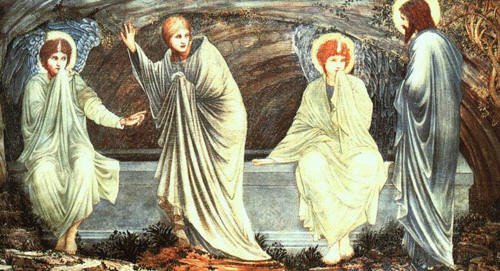
The Lord is Risen, Alleluia!

A Happy & Blessed Easter to All!

God saves me, Jesus enlightens me, the Holy Spirit is my life, thus I fear nothing.

Deacon John

Friday, April 14, 2006


Some Things That Catholics Do Not Believe

Very Rev. Joseph Di Bruno, D.D.

We have already passed in review what seem to be the principal points of Catholic belief, and now, in order to meet the most common of the misapprehensions and misrepresentations on these matters, we will here state, though it may be in part a repetition, some things that Catholics do not believe.

1. Catholics do not believe that there is any other Mediator of Redemption than our SAVIOUR JESUS CHRIST, "For there is no other name under heaven given to men, whereby we must be saved" than that of JESUS (Acts of the Apostles, iv.12); and when they call the Blessed Virgin or any other Saint a mediator, it is not in the sense of Mediator of Redemption attributed to our Saviour, but in the sense of intercessor or pleader, in which sense any Christian may be called a mediator, whenever he intercedes, or mediates between God and his fellow-man, as Abraham and Moses and St. Paul did, and thus prays for his neighbor. God Himself commanded Eliphaz and his friends to apply to the Patriarch Job that he should pray for them, and God promised to accept his prayers. "Go to my servant Job, and offer for yourselves a holocaust; and my servant Job shall pray for you; his face I will accept, that folly be not imputed to you" (Job xlii. 8.)
In this sense Moses could also say, "I was the mediator, and stood between the Lord and you". (Deuteronomy v. 5)

2. Catholics do not believe that the blessed Virgin is in any way equal or even comparable to God, for she, being a creature, although the most highly favored, is infinitely less than God. Nor do they claim for her any power beyond that which she derives from Him; for she is entirely dependent on God for her existence, her privileges, her grace and her glory.

The strong, loving expressions used oftentimes by Catholics, which seem to attribute to the Blessed Virgin more than is here stated, are to be understood in the limited sense meant by Catholics themselves, as here explained; that is, in a way consistent with the Catholic teaching and not in the unlimited, un-Catholic sense which persons not understanding that teaching may be led to apply to them. These tender expressions, I say, ought not to be judged of by cold or hostile criticism, for they spring from fervent, heart-felt devotion and unmeasured love.

If it were permitted to take offence at expressions which are only true in a limited sense, surely from those words of Scripture: "I have said; you are gods" (Psalm lxxxi. 6), one might argue that Holy Scripture holds certain men to be really gods. From the words of the Gospel: If any man come to me, and hate not his father, and mother, and wife, and children, and brethren, and sisters, . . . . he cannot be by disciple" (St. Luke xiv. 26), one might pretend that Christ encourages the hating of parents and other relatives. That direction of our Lord: "If thy right hand scandalize thee, cut it off" (St. Matth. v. 30) might be taken to justify self-mutilation. And from the words: "How knowest thou, O man, whether thou shalt save thy wife;" (I Corinth. vii. 16) some might argue that according to Scripture, a man can be the saviour of his wife.

If, therefore, even in the interpretation of Holy Scripture, it would be wrong to take in the full extent expressions that were meant in a qualified sense so still more unjust would it be to apply this wrong principle to expressions found in books of devotion or in religious poetical compositions, in which a certain latitude to the expansion of a warm heart is allowed.

It is a common practice among men to use expressions which are true only in a secondary and limited sense. For instance, a great poet or artist is spoken of as "divine," mothers often call their children their little "angels," "kings," and "queens," and are said to "adore" or "idolize" them, and no one thinks of blaming such tender exaggerations. And again, in the Marriage-Service in the Book of Common Prayer of the Established Church of England, the bridegroom has to say to the bride: "With my body I thee worship".

No one should take offence at these expressions; indeed, it would seem captious to do so; more especially when the speaker declares his meaning.

3. Catholics do not believe that there is any authority upon earth or in heaven that can give leave to commit any sin, even the least; or that a sin can be forgiven for money; or that a Priest can give valid absolution to a sinner who does not repent and truly purpose to forsake sin and amend his life.

4. Catholics do not believe that a man can by his own good works, independently of the Merits and Passion of Jesus Christ and of His grace, obtain salvation, or make any satisfaction for the guilt of his sins, or acquire any merit.

5. Catholics do not believe that it is allowable to break a lawful oath, or tell a lie, or do any other wicked thing whatever for the sake of promoting the supposed interest of the Church, or for any good, however great, likely to arise from it. The false and pernicious principle that the end justifies the means, or that we may do evil that good may come, is utterly condemned by the Catholic Church.

6. Catholics do not believe that it is in the power of the Church to add to the truths contained in the "deposit of faith," that is, to frame or enforce any doctrine which has not for its source the written or unwritten word of God, or authority from the same. Nor do they believe, when the Church makes a Definition in matters of faith, that this definition or article of faith is a new doctrine; it is only a solemn declaration and a clearer statement of what was believed, at least implicitly (that is, in an implied way, or inferentially), in the time of the Apostles, though some private persons might have doubted of it.

7. Catholics do not believe that Protestants who are baptized, who lead a good life, love God and their neighbor, and are blamelessly ignorant of the just claims of the Catholic Religion to be the one true Religion (which is called being in good faith), are excluded from Heaven, provided they believe that there is one God in three Divine Persons; *that God will duly reward the good and punish the wicked; that Jesus Christ is the Son of God made man, who redeemed us, and in whom we must trust for our salvation; and provided they thoroughly repent of having ever, by their sins, offended God.

Catholics hold that Protestants who have these dispositions, and who have no suspicion of their religion being false, and no means to discover, or fail in their honest endeavors to discover, the true Religion, and who are so disposed in their heart that they would at any cost embrace the Roman Catholic Religion if they knew it to be the true one, are Catholics in spirit and in some sense within the Catholic Church, without themselves knowing it. She holds that these Christians belong to, and are united to the "soul," as it is called, of the Catholic Church, although they are not united to the visible body of the Church by external communion with her, and by the outward profession of her faith.

Very different is the case of a person who, having the opportunity, neglects to learn from genuine trustworthy sources what the Catholic Religion is and really teaches, fearing, that were he to become convinced of the truth of the Catholic Faith, he would be compelled by his conscience to forsake his own religion, and bear the worldly inconveniences attached to this step. This very fear shows a want of good faith, and that he is not in that insurmountable ignorance which could excuse him in the sight of God, but that he is one of those of whom it is said in Psalm xxxv. 4, "He would not understand that he might do well."

Fairness, no less than common sense, teaches that a man should study and examine the teaching of the Catholic Church from Catholic sources before condemning her.

Surely no man ought to reject Catholic doctrine if he has not made himself well acquainted with them. Nor is is fair to form a judgment from misrepresentations made by ill-informed, interested, or prejudiced persons; one should rather, by the study of authorized Catholic works, judge of the truth with that calm and unprejudiced mind which the all-important subject of Religion deserves. Thus having heard both sides, you will be in a state to pass a right judgment and not in danger of being misled by prejudice.

Our Saviour gave no hope of salvation to the Samaritan woman unless she entered the one true Church of the time, saying to her who was destitute of a sure guide: "You adore that which you know not; we adore that which we know; for SALVATION IS OF THE JEWS". (St John iv. 22.) So likewise there is no salvation for any one who, having by God's grace come to the knowledge of the truth, obstinately refuses to join the true Church of God.

There was no safety out of the Ark of Noah during the deluge, and no one can be saved who is in no sense within the true Church, prefigured by the Ark. According to St. Cyprian: "No one can have God for his Father who has not the Church for his Mother. If any one could escape the deluge out of the Ark of Noah, he who is out of the Church may also escape." (Book on the Unity of the Church.)

It is hard to understand how a Protestant can daily say in the Apostles' Creed, as many happily do still say, "I believe in the Holy Catholic Church," without at least a thought arising in his mind, that perhaps after all the Church which alone is truly Catholic or universal, both in name and in fact, has more claim on his love and obedience than his own denomination, which really is not Catholic.
Catholic Belief: A Short and Simple Exposition of Catholic Doctrine, Chapter XLIV. (NY: Benzinger Brothers, 1884).
[From EWTN.com]


The Forty-Fourth Chapter

Do Not Be Concerned About Outward Things

The Voice of Christ:
MY CHILD, there are many matters of which it is well for you to be ignorant, and to consider yourself as one who is dead upon the earth and to whom the whole world is crucified.

There are many things, too, which it is well to pass by with a deaf ear, thinking, instead, of what is more to your peace. It is more profitable to turn away from things which displease you and to leave to every man his own opinion than to take part in quarrelsome talk. If you stand well with God and look to His judgment, you will more easily bear being worsted.

The Disciple:
To what have we come, Lord? Behold, we bewail a temporal loss. We labor and fret for a small gain, while loss of the soul is forgotten and scarcely ever returns to mind. That which is of little or no value claims our attention, whereas that which is of highest necessity is neglected—all because man gives himself wholly to outward things. And unless he withdraws himself quickly, he willingly lies immersed in externals.

[Imitation of Christ, Book Three. Public Domain.]


GOOD FRIDAY


Spirit & Life

"The words I spoke to you are spirit and life." (Jn 6:63)

Human Life International e-NewsletterVolume 1, Number 11 Friday, April 14, 2006
......................
www.hli.org
Good Friday: The World's First Exorcism

St. Michael's exorcism of heaven is witnessed in the 12th chapter of the Book of Revelation where he forcefully casts out the ravenous dragon from God's realm, and his minions with him. The devil wanted to devour a new-born baby and deprive a woman of her motherhood—kind of like the abortion industry does today—but God would have nothing of it. Yet, Revelation also warns us of the consequences of that exorcism: "But woe to you, earth and sea, for the devil has come down upon you!"

Woe, indeed.
The devil must also be cast from the earth to the one place where he belongs, in the hell that God created for him and his angels, and this definitive exorcism of the earth was accomplished on Good Friday. Jesus exorcised the devil from our lives by the one and only force that has the power to separate man from the devil and cast him out: His own Precious Blood. One week before His death the Lord Himself solemnly proclaimed that He would apply His authority in this way:
"Now has judgment come upon this world; now will this world's prince be driven out, and I—once I am lifted up from the earth—will draw all men to myself" (Jn 12:31-32).

These are powerful words for sure but not to be taken as just the pious hopes of a man with a death sentence. Jesus was telling us that He would do for us what no other death or human act could accomplish. He would place an absolute barrier between us and the devil with a wall of Blood called the Crucifixion. It all fits together for anyone who has eyes to see:
He is the Paschal Lamb that was slain for the sins of His people; He is the new Passover sacrifice celebrated as His people departed the land of slavery; His is the Blood on the doorposts and lintels of His people's hearts guarding them from the angel of death. No wonder the Church "lifts up" the Cross of

Christ for all men to see!
On Good Friday we must re-learn the value of this Blood for our sad world! By this Sacrifice the devil has indeed been cast out and has no power over those who have entered into the new covenant won by Christ at the cost of His Blood. The devil will continue to carry out his warfare against God's people, but his work now has no lasting consequences for those who choose Christ. Those who are freed by the Blood of Christ are free indeed. For this reason the Church exhorts us to remain in communion of mind and heart with the Church, the one place where this Sacrifice is celebrated daily. It is the only assurance we have of total protection from evil.

The Blood of Christ is also our greatest weapon against the evil that afflicts those we love. Do you have a loved one that is pierced by an addiction? Call Christ's Blood down upon him daily. Pray that the shed Blood will penetrate all the demonic bonds on his soul and break their grip. Do you have a family member or friend mired in an immoral lifestyle? Immerse her in Christ's Blood and symbolically bring her in prayer to Calvary to stand with Mary at the only place in the world the devil will not go. In time you will see the immense fruitfulness of that Sacrifice. It has the power to exorcise the world and free all its inhabitants from evil.

Today, Good Friday, the Day of our salvation, we proclaim in our Church's liturgy the immense hope we have for healing from the devil's malice:
Behold, behold, the wood of the Cross on which was hung our salvation! Come, let us worship!


About the Author »
Donate to Spirit & Life! »Consider an online donationto promote and expand thereach of this powerfuland one-of-a-kind pro-life newsletter.
Rules for Fast and Abstinence »
The Way of Sanctity »A timely reflection on the means of reaching holiness.
For the Spirit & Life archives click here »
Sincerely Yours in Christ, Rev. Thomas J. Euteneuer,President, Human Life International

Subscribe/Unsubscribe

Copyright 2006 - Human Life International Permission granted for unlimited use. Credit required.
Human Life International4 Family Life Lane – Front Royal, VA 22630 U.S.A.Phone: 1-800-549-LIFE Fax: 540-622-6247E-mail:
hli@hli.org Website: www.hli.org

Thursday, April 13, 2006


The Forty-Third Chapter

Beware Vain and Worldly Knowledge

The Voice of Christ:
MY CHILD, do not let the fine-sounding and subtle words of men deceive you. For the kingdom of heaven consists not in talk but in virtue. Attend, rather, to My words which enkindle the heart and enlighten the mind, which excite contrition and abound in manifold consolations.

Never read them for the purpose of appearing more learned or more wise. Apply yourself to mortifying your vices, for this will benefit you more than your understanding of many difficult questions.

Though you shall have read and learned many things, it will always be necessary for you to return to this one principle: I am He who teaches man knowledge, and to the little ones I give a clearer understanding than can be taught by man. He to whom I speak will soon be wise and his soul will profit. But woe to those who inquire of men about many curious things, and care very little about the way they serve Me.

The time will come when Christ, the Teacher of teachers, the Lord of angels, will appear to hear the lessons of all—that is, to examine the conscience of everyone. Then He will search Jerusalem with lamps and the hidden things of darkness will be brought to light and the arguings of men’s tongues be silenced.

I am He Who in one moment so enlightens the humble mind that it comprehends more of eternal truth than could be learned by ten years in the schools. I teach without noise of words or clash of opinions, without ambition for honor or confusion of argument.

I am He Who teaches man to despise earthly possessions and to loathe present things, to ask after the eternal, to hunger for heaven, to fly honors and to bear with scandals, to place all hope in Me, to desire nothing apart from Me, and to love Me ardently above all things. For a certain man by loving Me intimately learned divine truths and spoke wonders. He profited more by leaving all things than by studying subtle questions.

To some I speak of common things, to others of special matters. To some I appear with sweetness in signs and figures, and to others I appear in great light and reveal mysteries. The voice of books is but a single voice, yet it does not teach all men alike, because I within them am the Teacher and the Truth, the Examiner of hearts, the Understander of thoughts, the Promoter of acts, distributing to each as I see fit. [1 Cor 12:1]

[Imitation of Christ, Book Three. Public Domain.]

Wednesday, April 12, 2006


The Forty-Second Chapter

Peace is Not to Be Placed in Men

The Voice of Christ:
MY CHILD, if you place your peace in any creature because of your own feeling or for the sake of his company, you will be unsettled and entangled.

But if you have recourse to the ever-living and abiding Truth, you will not grieve if a friend should die or forsake you. Your love for your friend should be grounded in Me, and for My sake you should love whoever seems to be good and is very dear to you in this life.

Without Me friendship has no strength and cannot endure. Love which I do not bind is neither true nor pure.

You ought, therefore, to be so dead to such human affections as to wish as far as lies within you to be without the fellowship of men. Man draws nearer to God in proportion as he withdraws farther from all earthly comfort. And he ascends higher to God as he descends lower into himself and grows more vile in his own eyes.

He who attributes any good to himself hinders God’s grace from coming into his heart, for the grace of the Holy Spirit seeks always the humble heart. [1 Peter 5:5]

If you knew how to annihilate yourself completely and empty yourself of all created love, then I should overflow in you with great grace. When you look to creatures, the sight of the Creator is taken from you. Learn, therefore, to conquer yourself in all things for the sake of your Maker.

Then will you be able to attain to divine knowledge. But anything, no matter how small, that is loved and regarded inordinately keeps you back from the highest good and corrupts the soul.

[Imitation of Christ, Book Three. Public Domain.]

Monday, April 10, 2006


The Forty-First Chapter

Contempt for All Earthly Honor

The Voice of Christ:
MY CHILD, do not take it to heart if you see others honored and advanced, while you yourself are despised and humbled. Lift up your heart to Me in heaven and the contempt of men on earth will not grieve you.

The Disciple:
Lord, we are blinded and quickly misled by vanity.

If I examine myself rightly, no injury has ever been done me by any creature; hence I have nothing for which to make just complaint to You.

But I have sinned often and gravely against You; therefore is every creature in arms against me.

Confusion and contempt should in justice come upon me, but to You due praise, honor, and glory. [Dan 9:7; Baruch 1:15]

And unless I prepare myself to be willingly despised and forsaken by every creature, to be considered absolutely nothing, I cannot have interior peace and strength, nor can I be enlightened spiritually or completely united with You.

[Imitation of Christ, Book Three. Public Domain]


The Fortieth Chapter

Man Has No Good in Himself and Can Glory in Nothing

The Disciple:
LORD, what is man that You are mindful of him, or the son of man that You visit him? [Psalm 8:5]

What has man deserved that You should give him Your grace? What cause have I, Lord, to complain if You desert me, or what objection can I have if You do not do what I ask?

This I may think and say in all truth: “Lord, I am nothing, of myself I have nothing that is good; I am lacking in all things, and I am ever tending toward nothing. And unless I have Your help and am inwardly strengthened by You, I become quite lukewarm and lax.”

But You, Lord, are always the same. You remain forever, always good, just, and holy; doing all things rightly, justly, and holily, disposing them wisely. [Wisdom 12:15]

I, however, who am more ready to go backward than forward, do not remain always in one state, for I change with the seasons. Yet my condition quickly improves when it pleases You and when You reach forth Your helping hand. For You alone, without human aid, can help me and strengthen me so greatly that my heart shall no more change but be converted and rest solely in You.

Hence, if I knew well how to cast aside all earthly consolation, either to attain devotion or because of the necessity which, in the absence of human solace, compels me to seek You alone, then I could deservedly hope for Your grace and rejoice in the gift of new consolation.

Thanks be to You from Whom all things come, whenever it is well with me. In Your sight I am vanity and nothingness, a weak, unstable man. In what, therefore, can I glory, and how can I wish to be highly regarded? Is it because I am nothing? This, too, is utterly vain. Indeed, the greatest vanity is the evil plague of empty self-glory, because it draws one away from true glory and robs one of heavenly grace.

For when a man is pleased with himself he displeases You, when he pants after human praise he is deprived of true virtue. But it is true glory and holy exultation to glory in You and not in self, to rejoice in Your name rather than in one’s own virtue, and not to delight in any creature except for Your sake.

Let Your name, not mine, be praised. Let Your work, not mine, be magnified. Let Your holy name be blessed, but let no human praise be given to me. You are my glory. You are the joy of my heart. In You I will glory and rejoice all the day, and for myself I will glory in nothing but my infirmities. [2 Cor 12:5]

Let the Jews seek the glory that comes from another. I will seek that which comes from God alone. [John 5:44]

All human glory, all temporal honor, all worldly position is truly vanity and foolishness compared to Your everlasting glory. O my Truth, my Mercy, my God, O Blessed Trinity, to You alone be praise and honor, power and glory, throughout all the endless ages of ages.

[Imitation of Christ, Book Three. Public Domain.]

Sunday, April 09, 2006


The Thirty-Ninth Chapter

A Man Should Not Be Unduly Solicitous About His Affairs

The Voice of Christ:
MY CHILD, always commit your cause to Me. I will dispose of it rightly in good time. Await My ordering of it and it will be to your advantage.

The Disciple:
Lord, I willingly commit all things to You, for my anxiety can profit me little. But I would that I were not so concerned about the future, and instead offered myself without hesitation to Your good pleasure.

The Voice of Christ:
My child, it often happens that a man seeks ardently after something he desires and then when he has attained it he begins to think that it is not at all desirable; for affections do not remain fixed on the same thing, but rather flit from one to another. It is no very small matter, therefore, for a man to forsake himself even in things that are very small.

A man’s true progress consists in denying himself, and the man who has denied himself is truly free and secure. The old enemy, however, setting himself against all good, never ceases to tempt them, but day and night plots dangerous snares to cast the unwary into the net of deceit.

“Watch ye and pray,” says the Lord, “that ye enter not into temptation.” [Matt 26:41]

[Imitation of Christ, Book Three. Public Domain.]


PASSION SUNDAY (PALM SUNDAY)

Today, after the blessings of and distributing of the palms, and after the reading of the Palm Sunday Gospel (Matt 21:1-9) and then the Procession around the church, the Passion of our Lord Jesus Christ according to St. Matthew (26:1-54) is chanted by three deacons; one is the narrator; one the words of our Blessed Saviour; the third the words of the Jewish people.

The shouting enthusiasts at the gates of Jerusalem thought Our Lord's victory and reign would be nationalistic, political, and within the immediate future. They hailed Christ for the wrong reasons, and then let Him be crucified.

We worship Christ as the King who went to His death voluntarily, with a royal freedom, because it was the Father's Will. Yes, His human nature shrank from the violence He saw He was to suffer, but Jesus freely submitted to it: "My Father, if this cup cannot pass away unless I drink it, Thy will be done." (Matt 26:37)

Having surrendered Himself to the mob to be arrested and then a mock trial, Jesus dies for us on Calvary, His Precious Blood and water from His Sacred Heart, pierced by a sword, seals the New Covenant and washes away the sins of a repentant world, and forming a new people of God out of every nation, the Mystical Body of Christ.

PRAYER
Almighty and Eternal God, it was Your Will that our Saviour should become man and suffer upon the Cross as a model of humility for all mankind. Grant that we may follow the example of His patience and share in His resurrection. Through Christ Our Lord. Amen.


God saves me, Jesus enlightens me, the Holy Spirit is my life, thus I fear nothing.

Deacon John

Saturday, April 08, 2006


April 2, 2006 Message Given to Mirjana

Dear Children, I am coming to you, because, with my own example, I wish to show you the importance of prayer for those who have not come to know the love of God. You ask yourself if you are following me? My children, do you not recognize the signs of the times? Do you not speak of them? Come follow me. As a mother I call you. Thank you for having responded.


The Thirty-Eighth Chapter

The Right Ordering of External Affairs; Recourse to God in Dangers

The Voice of Christ:
MY CHILD, you must strive diligently to be inwardly free, to have mastery over yourself everywhere, in every external act and occupation, that all things be subject to you and not you to them, that you be the master and director of your actions, not a slave or a mere hired servant.

You should be rather a free man and a true Hebrew, arising to the status and freedom of the children of God who stand above present things to contemplate those which are eternal; who look upon passing affairs with the left eye and upon those of heaven with the right; whom temporal things do not so attract that they cling to them, but who rather put these things to such proper service as is ordained and instituted by God, the great Workmaster, Who leaves nothing unordered in His creation.

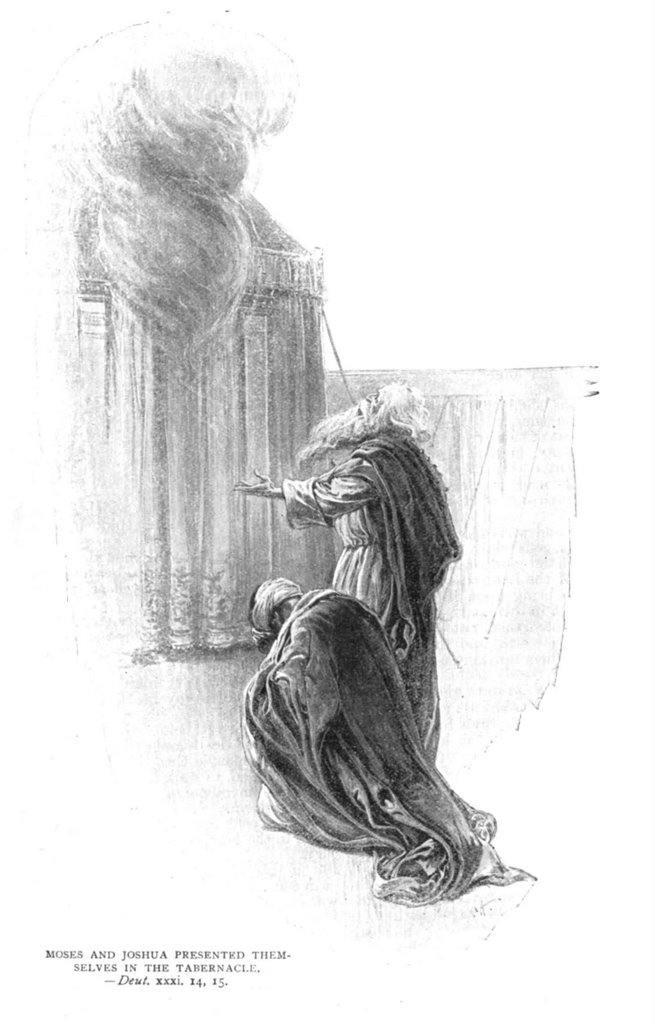
If, likewise, in every happening you are not content simply with outward appearances, if you do not regard with carnal eyes things which you see and hear, but whatever be the affair, enter with Moses into the tabernacle to ask advice of the Lord, you will sometimes hear the divine answer and return instructed in many things present and to come.

For Moses always had recourse to the tabernacle for the solution of doubts and questions, and fled to prayer for support in dangers and the evil deeds of men. So you also should take refuge in the secret chamber of your heart, begging earnestly for divine aid. [Matt 6:6]

For this reason, as we read, Joshua and the children of Israel were deceived by the Gibeonites because they did not first seek counsel of the Lord, but trusted too much in fair words and hence were deceived by false piety. [Josue 9:15]

[Imitation of Christ, Book Three. Public Domain.]

Friday, April 07, 2006


The Thirty-Seventh Chapter

Pure and Entire Resignation of Self to Obtain Freedom of Heart

The Voice of Christ:
MY CHILD, renounce self and you shall find Me. Give up your own self-will, your possessions, and you shall always gain. For once you resign yourself irrevocably, greater grace will be given you.

The Disciple:
How often, Lord, shall I resign myself? And in what shall I forsake myself?

The Voice of Christ:
Always, at every hour, in small matters as well as great—I except nothing. In all things I wish you to be stripped of self. How otherwise can you be mine or I yours unless you be despoiled of your own will both inwardly and outwardly?

The sooner you do this the better it will be for you, and the more fully and sincerely you do it the more you will please Me and the greater gain you will merit.

Some there are who resign themselves, but with certain reservation; they do not trust fully in God and therefore they try to provide for themselves. Others, again, at first offer all, but afterward are assailed by temptation and return to what they have renounced, thereby making no progress in virtue. These will not reach the true liberty of a pure heart nor the grace of happy friendship with Me unless they first make a full resignation and a daily sacrifice of themselves. Without this no fruitful union lasts nor will last.

I have said to you very often, and now I say again: forsake yourself, renounce yourself and you shall enjoy great inward peace. Give all for all. Ask nothing, demand nothing in return. Trust purely and without hesitation in Me, and you shall possess Me. You will be free of heart and darkness will not overwhelm you.

Strive for this, pray for this, desire this—to be stripped of all selfishness and naked to follow the naked Jesus, to die to self and live forever for Me. Then all vain imaginations, all wicked disturbances and superfluous cares will vanish. Then also immoderate fear will leave you and inordinate love will die.

[Imitation of Christ, Book Three. Public Domain.]


THE SEVEN SORROWS
OF THE BLESSED VIRGIN MARY

On this day, in the old calendar, the Mass of the Seven Sorrows of the Blessed Virgin Mary could be said in place of the ferial Mass.

The psalms of David and the prophecies of Isaias told rather plainly what would happen to Mary's Son, our Lord Jesus Christ. But to help extend God's mercy to all mankind, Our Blessed Lady suffered the seven great swords of her life and the multitude of little swords. All of them were the cost of mothering the earth's Redeemer and His members. Calvary was the climax of her sorrows.

The Gospel for today's feast (John 19:25-27) gives us the picture of this Truth. Jesus has been crucified. In His great agony He looks down from the Cross and sees Mother Mary and St. John. 'When Jesus, therefore, saw His Mother and the disciple standing by, whom He loved, He said to His Mother, "Woman, behold thy son." Then He said to the disciple, "Behold, thy mother." And from that hour the disciple took her into his home.' (John 19:27)

From that moment Our Lady became our spiritual Mother, who loves and cares for us better than any earthly mother could do. Mother Mary takes care of all our needs, spiritual and temporal, and if we consecrate ourselves to Immaculate Heart, she will mold us into an image of her divine Son, Jesus!

As the great Pope Leo XIII said: "On the cross . . . He entrusted the entire human race, in the person of His disciple John, to her care and charge"


The Seven Sorrows of the Blessed Virgin Mary

1. The Prophecy of Simeon
2. The Flight into Egypt
3. The Loss of Jesus in the Temple
4. Mary meets Jesus Carrying the Cross
5. The Crucifixion
6. Mary Receives the Dead Body of Her Son
7. The Burial of Her Son and Closing of the Tomb

The graces and merits won by the anguish of Jesus and His Mother continually come to us through her hands. This fruit of her tears makes her also the "cause of our joy" and the sweetness and hope of the world.
(Excerpted from the Daily Missal of the Mystical Body)

PRAYER
O God, in Your Passion, the prophecy of Simeon was fulfilled that a sword of sorrow should pierce the sweet soul of Your glorious Virgin- Mother Mary. We reverently recall her sufferings and sorrow; mercifully grant us the fruits of the redemption that was paid for by Your own sufferings, through the merits and prayers of all the saints watching beside the Cross; who lives and rules with God the Father and the Holy Spirit. Amen.


God saves me, Jesus enlightens me, the Holy Spirit is my life, thus I fear nothing.

Deacon John

Thursday, April 06, 2006


The Thirty-Sixth Chapter

The Vain Judgments of Men

The Voice of Christ:
MY CHILD, trust firmly in the Lord, and do not fear the judgment of men when conscience tells you that you are upright and innocent. For it is good and blessed to suffer such things, and they will not weigh heavily on the humble heart that trusts in God rather than in itself. Many men say many things, and therefore little faith is to be put in them.

Likewise, it is impossible to satisfy all men. Although Paul tried to please all in the Lord, and became all things to all men, [1 Cor 9:22] yet he made little of their opinions. He labored abundantly for the edification and salvation of others, as much as lay in him and as much as he could, but he could not escape being sometimes judged and despised by others.

Therefore, he committed all to God Who knows all things, and defended himself by his patience and humility against the tongues of those who spoke unjustly or thought foolish things and lies, or made accusations against him. Sometimes, indeed, he did answer them, but only lest his silence scandalize the weak.

Who are you, then, that you should be afraid of mortal man? [Isa 51:12] Today he is here, tomorrow he is not seen. [2 Mach 2:63]

Fear God and you will not be afraid of the terrors of men. What can anyone do to you by word or injury? He hurts himself rather than you, and no matter who he may be he cannot escape the judgment of God. Keep God before your eyes, therefore, and do not quarrel with peevish words.

If it seems, then, that you are worsted and that you suffer undeserved shame, do not repine over it and do not lessen your crown by impatience. Look instead to heaven, to Me, Who have power to deliver you from all disgrace and injury, and to render to everyone according to his works. [Matt 16:27]

[Imitation of Christ, Book Three. Public Domain.]

Wednesday, April 05, 2006


The Thirty-Fifth Chapter

There is No Security from Temptation in This Life

The Voice of Christ

MY CHILD, in this life you are never safe, and as long as you live the weapons of the spirit will ever be necessary to you. You dwell among enemies. You are subject to attack from the right and the left. If, therefore, you do not guard yourself from every quarter with the shield of patience, you will not remain long unscathed.

Moreover, if you do not steadily set your heart on Me, with a firm will to suffer everything for My sake, you will not be able to bear the heat of this battle or to win the crown of the blessed. You ought, therefore, to pass through all these things bravely and to oppose a strong hand to whatever stands in your way. For to him who triumphs heavenly bread is given, while for him who is too lazy to fight there remains much misery.

If you look for rest in this life, how will you attain to everlasting rest? Dispose yourself, then, not for much rest but for great patience. Seek true peace, not on earth but in heaven; not in men or in other creatures but in God alone. [John 14:27] For love of God you should undergo all things cheerfully, all labors and sorrows, temptations and trials, anxieties, weaknesses, necessities, injuries, slanders, rebukes, humiliations, confusions, corrections, and contempt. [James 1:2]

For these are helps to virtue. These are the trials of Christ’s recruit. These form the heavenly crown. For a little brief labor I will give an everlasting crown, and for passing confusion, glory that is eternal.

Do you think that you will always have spiritual consolations as you desire? My saints did not always have them. Instead, they had many afflictions, temptations of various kinds, and great desolation. Yet they bore them all patiently. They placed their confidence in God rather than in themselves, knowing that the sufferings of this life are not worthy to be compared with the glory that is to come. [Romans 8:18]

And you—do you wish to have at once that which others have scarcely obtained after many tears and great labors?

Wait for the Lord, act bravely, and have courage. Do not lose trust. Do not turn back but devote your body and soul constantly to God’s glory. I will reward you most plentifully. I will be with you in every tribulation.

[Imitation of Christ, Book Three. Public Domain.]


Tuesday, April 04, 2006


The Thirty-Fourth Chapter

God is Sweet Above All Things and in All Things to Those Who Love Him

The Disciple:

BEHOLD, my God and my all! What more do I wish for; what greater happiness can I desire? O sweet and delicious word! But sweet only to him who loves it, and not to the world or the things that are in the world.

My God and my all! These words are enough for him who understands, and for him who loves it is a joy to repeat them often. For when You are present, all things are delightful; when You are absent, all things become loathsome. It is You Who give a heart tranquillity, great peace and festive joy. It is You Who make us think well of all things, and praise You in all things. Without You nothing can give pleasure for very long, for if it is to be pleasing and tasteful, Your grace and the seasoning of Your wisdom must be in it. What is there that can displease him whose happiness is in You? And, on the contrary, what can satisfy him whose delight is not in You?

The wise men of the world, the men who lust for the flesh, are wanting in Your wisdom, because in the world is found the utmost vanity, and in the flesh is death. But they who follow You by disdaining worldly things and mortifying the flesh are known to be truly wise, for they are transported from vanity to truth, from flesh to spirit. By such as these God is relished, and whatever good is found in creatures they turn to praise of the Creator. But great—yes, very great, indeed—is the difference between delight in the Creator and in the creature, in eternity and in time, in Light uncreated and in the light that is reflected.

O Light eternal, surpassing all created brightness, flash forth the lightning from above and enlighten the inmost recesses of my heart. Cleanse, cheer, enlighten, and vivify my spirit with all its powers, that it may cleave to You in ecstasies of joy. Oh, when will that happy and wished-for hour come, that You may fill me with Your presence and become all in all to me? So long as this is not given me, my joy will not be complete.

The old man, alas, yet lives within me. He has not yet been entirely crucified; he is not yet entirely dead. He still lusts strongly against the spirit, and he will not leave the kingdom of my soul in peace. But You, Who can command the power of the sea and calm the tumult of its waves, arise and help me. Scatter the nations that delight in war; crush them in Your sight. Show forth I beg, Your wonderful works and let Your right hand be glorified, because for me there is no other hope or refuge except in You, O Lord, my God.

[Imitation of Christ, Book Three. Public Domain.]

Monday, April 03, 2006


Churchgoers Live Longer

A new study by LiveScience.com says:

There are many things you can do to increase your life expectancy: exercise, eat well, take your medication and ... go to church.

A new study finds people who attend religious services weekly live longer. Specifically, the research looked at how many years are added to life expectancy based on:

Regular physical exercise: 3.0-to-5.1 years Proven therapeutic regimens: 2.1-to-3.7 years Regular religious attendance: 1.8-to-3.1 years

The role of religion

The study, which is actually a review of existing research from the three categories, does not reveal what the link between faith and health might be.

"Religious attendance is not a mode of medical therapy," said study leader Daniel Hall, a resident in general surgery at the University of Pittsburgh Medical Center. "While this study was not intended for use in clinical decision making, these findings tell us that there is something to examine further."

"The significance of this finding may prove to be controversial," he said. "But at the very least, it shows that further research into the associations between religion and health might have implications for medical practice."

In a telephone interview, Hall speculated that the social aspect of religion could play a role in the results: "There is something about being knit into the type of community that religious communities embody that has a way of mediating a positive health effect," he told LiveScience. Perhaps, he said, being involved in a religion "can then decrease your level of stress in life or increase your ability to cope with stress."

Another possibility: "Being in a religious community helps you make meaning out of your life," Hall suggested.

***************************************************************
You should see the parishoners at the church I attend! 90% have grey hair, including me! Not only do we live longer, but we are happier, and know that there is a purpose in life. We offer up our sufferings for others, cause we know that Jesus suffered for us! We also realize that life is short, 70 or 80 years for most people, but our final destination is heaven, which we are approaching soon. That's when real happiness begins. Our joy on earth will be completed when we get to heaven!
See you there!!!


The Thirty-Third Chapter

Restlessness of Soul—Directing Our Final Intention Toward God

The Voice of Christ:
MY CHILD, do not trust in your present feeling, for it will soon give way to another.

As long as you live you will be subject to changeableness in spite of yourself. You will become merry at one time and sad at another, now peaceful but again disturbed, at one moment devout and the next indevout, sometimes diligent while at other times lazy, now grave and again flippant.

But the man who is wise and whose spirit is well instructed stands superior to these changes. He pays no attention to what he feels in himself or from what quarter the wind of fickleness blows, so long as the whole intention of his mind is conducive to his proper and desired end.

For thus he can stand undivided, unchanged, and unshaken, with the singleness of his intention directed unwaveringly toward Me, even in the midst of so many changing events. And the purer this singleness of intention is, with so much the more constancy does he pass through many storms.

But in many ways the eye of pure intention grows dim, because it is attracted to any delightful thing that it meets. Indeed, it is rare to find one who is entirely free from all taint of self-seeking.

The Jews of old, for example, came to Bethany to Martha and Mary, not for Jesus’ sake alone, but in order to see Lazarus. [John 12:9]

The eye of your intention, therefore, must be cleansed so that it is single and right. It must be directed toward Me, despite all the objects which may interfere.

[Imitation of Christ. Book Three. Public Domain.]

Sunday, April 02, 2006


The Thirty-Second Chapter

Self-Denial and the Renunciation of Evil Appetites

The Voice of Christ:
MY CHILD, you can never be perfectly free unless you completely renounce self, [Matt 16:24] for all who seek their own interest and who love themselves are bound in fetters. They are unsettled by covetousness and curiosity, always searching for ease and not for the things of Christ, often devising and framing that which will not last, for anything that is not of God will fail completely.

Hold to this short and perfect advice, therefore: give up your desires and you will find rest. [Matt 11:29] Think upon it in your heart, and when you have put it into practice you will understand all things.

The Disciple:
But this, Lord, is not the work of one day, nor is it mere child’s play; indeed, in this brief sentence is included all the perfection of holy persons.

The Voice of Christ:
My child, you should not turn away or be downcast when you hear the way of the perfect. Rather you ought to be spurred on the more toward their sublime heights, or at least be moved to seek perfection.

I would this were the case with you—that you had progressed to the point where you no longer loved self but simply awaited My bidding and his whom I have placed as father over you. Then you would please Me very much, and your whole life would pass in peace and joy.

But you have yet many things which you must give up, and unless you resign them entirely to Me you will not obtain that which you ask.
“I counsel thee to buy of me gold, fire-tried, that thou mayest be made rich” [Apoc 3:18] —rich in heavenly wisdom which treads underfoot all that is low. Put aside earthly wisdom, all human self-complacency.

I have said: exchange what is precious and valued among men for that which is contemptible. For true heavenly wisdom—not to think highly of self and not to seek glory on earth—does indeed seem mean and small and is well-nigh forgotten, as many men praise it with their mouths but shy far away from it in their lives. Yet this heavenly wisdom is a pearl of great price, which is hidden from many.

[Imitation of Christ, Book Three. Public Domain.]