Tuesday, February 14, 2006


The Twenty-Second Chapter

Thoughts on the Misery of Man

WHEREVER you are, wherever you go, you are miserable unless you turn to God. So why be dismayed when things do not happen as you wish and desire? Is there anyone who has everything as he wishes? No—neither I, nor you, nor any man on earth. There is no one in the world, be he Pope or king, who does not suffer trial and anguish.

Who is the better off then? Surely, it is the man who will suffer something for God. Many unstable and weak-minded people say: “See how well that man lives, how rich, how great he is, how powerful and mighty.” But you must lift up your eyes to the riches of heaven and realize that the material goods of which they speak are nothing. These things are uncertain and very burdensome because they are never possessed without anxiety and fear. Man’s happiness does not consist in the possession of abundant goods; a very little is enough.

Living on earth is truly a misery. The more a man desires spiritual life, the more bitter the present becomes to him, because he understands better and sees more clearly the defects, the corruption of human nature. To eat and drink, to watch and sleep, to rest, to labor, and to be bound by other human necessities is certainly a great misery and affliction to the devout man, who would gladly be released from them and be free from all sin. Truly, the inner man is greatly burdened in this world by the necessities of the body, and for this reason the Prophet prayed that he might be as free from them as possible, when he said: “From my necessities, O Lord, deliver me.” [Psalm 34:17]

But woe to those who know not their own misery, and greater woe to those who love this miserable and corruptible life. Some, indeed, can scarcely procure its necessities either by work or by begging; yet they love it so much that, if they could live here always, they would care nothing for the kingdom of God.

How foolish and faithless of heart are those who are so engrossed in earthly things as to relish nothing but what is carnal! Miserable men indeed, for in the end they will see to their sorrow how cheap and worthless was the thing they loved.

The saints of God and all devout friends of Christ did not look to what pleases the body nor to the things that are popular from time to time. Their whole hope and aim centered on the everlasting good. Their whole desire pointed upward to the lasting and invisible realm, lest the love of what is visible drag them down to lower things.

Do not lose heart, then, my brother, in pursuing your spiritual life. There is yet time, and your hour is not past. Why delay your purpose? Arise! Begin at once and say: “Now is the time to act, now is the time to fight, now is the proper time to amend.”

When you are troubled and afflicted, that is the time to gain merit. You must pass through water and fire before coming to rest. Unless you do violence to yourself you will not overcome vice.

So long as we live in this fragile body, we can neither be free from sin nor live without weariness and sorrow. Gladly would we rest from all misery, but in losing innocence through sin we also lost true blessedness. Therefore, we must have patience and await the mercy of God until this iniquity passes, until mortality is swallowed up in life.

How great is the frailty of human nature which is ever prone to evil! Today you confess your sins and tomorrow you again commit the sins which you confessed. One moment you resolve to be careful, and yet after an hour you act as though you had made no resolution.

We have cause, therefore, because of our frailty and feebleness, to humble ourselves and never think anything great of ourselves. Through neglect we may quickly lose that which by God’s grace we have acquired only through long, hard labor. What, eventually, will become of us who so quickly grow lukewarm? Woe to us if we presume to rest in peace and security when actually there is no true holiness in our lives. It would be beneficial for us, like good novices, to be instructed once more in the principles of a good life, to see if there be hope of amendment and greater spiritual progress in the future.

[Imitation of Christ, Book One. Public Domain.]

Monday, February 13, 2006


The Twenty-First Chapter

Sorrow of Heart

IF YOU wish to make progress in virtue, live in the fear of the Lord, do not look for too much freedom, discipline your senses, and shun inane silliness. Sorrow opens the door to many a blessing which dissoluteness usually destroys.

It is a wonder that any man who considers and meditates on his exiled state and the many dangers to his soul, can ever be perfectly happy in this life. Lighthearted and heedless of our defects, we do not feel the real sorrows of our souls, but often indulge in empty laughter when we have good reason to weep. No liberty is true and no joy is genuine unless it is founded in the fear of the Lord and a good conscience.

Happy is the man who can throw off the weight of every care and recollect himself in holy contrition. Happy is the man who casts from him all that can stain or burden his conscience.

Fight like a man. Habit is overcome by habit. If you leave men alone, they will leave you alone to do what you have to do. Do not busy yourself about the affairs of others and do not become entangled in the business of your superiors. Keep an eye primarily on yourself and admonish yourself instead of your friends.

If you do not enjoy the favor of men, do not let it sadden you; but consider it a serious matter if you do not conduct yourself as well or as carefully as is becoming for a servant of God and a devout religious.

It is often better and safer for us to have few consolations in this life, especially comforts of the body. Yet if we do not have divine consolation or experience it rarely, it is our own fault because we seek no sorrow of heart and do not forsake vain outward satisfaction.

Consider yourself unworthy of divine solace and deserving rather of much tribulation. When a man is perfectly contrite, the whole world is bitter and wearisome to him.

A good man always finds enough over which to mourn and weep; whether he thinks of himself or of his neighbor he knows that no one lives here without suffering, and the closer he examines himself the more he grieves.

The sins and vices in which we are so entangled that we can rarely apply ourselves to the contemplation of heaven are matters for just sorrow and inner remorse.

I do not doubt that you would correct yourself more earnestly if you would think more of an early death than of a long life. And if you pondered in your heart the future pains of hell or of purgatory, I believe you would willingly endure labor and trouble and would fear no hardship. But since these thoughts never pierce the heart and since we are enamored of flattering pleasure, we remain very cold and indifferent. Our wretched body complains so easily because our soul is altogether too lifeless.

Pray humbly to the Lord, therefore, that He may give you the spirit of contrition and say with the Prophet: “Feed me, Lord, with the bread of mourning and give me to drink of tears in full measure.” [Psalm 80:5]

[Imitation of Christ, Book One. Public domain.]

Sunday, February 12, 2006


The Twentieth Chapter

The Love of Solitude and Silence

SEEK a suitable time for leisure and meditate often on the favors of God. Leave curiosities alone. Read such matters as bring sorrow to the heart rather than occupation to the mind. If you withdraw yourself from unnecessary talking and idle running about, from listening to gossip and rumors, you will find enough time that is suitable for holy meditation.

Very many great saints avoided the company of men wherever possible and chose to serve God in retirement. “As often as I have been among men,” said one writer, “I have returned less a man.” We often find this to be true when we take part in long conversations. It is easier to be silent altogether than not to speak too much. To stay at home is easier than to be sufficiently on guard while away. Anyone, then, who aims to live the inner and spiritual life must go apart, with Jesus, from the crowd. [John 5:13]

No man appears in safety before the public eye unless he first relishes obscurity. No man is safe in speaking unless he loves to be silent. No man rules safely unless he is willing to be ruled. No man commands safely unless he has learned well how to obey. No man rejoices safely unless he has within him the testimony of a good conscience. [2 Cor. 1:12]

More than this, the security of the saints was always enveloped in the fear of God, nor were they less cautious and humble because they were conspicuous for great virtues and graces. The security of the wicked, on the contrary, springs from pride and presumption, and will end in their own deception.

Never promise yourself security in this life, even though you seem to be a good religious, or a devout hermit. It happens very often that those whom men esteem highly are more seriously endangered by their own excessive confidence. Hence, for many it is better not to be too free from temptations, but often to be tried lest they become too secure, too filled with pride, or even too eager to fall back upon external comforts.

If only a man would never seek passing joys or entangle himself with worldly affairs, what a good conscience he would have. What great peace and tranquillity would be his, if he cut himself off from all empty care and thought only of things divine, things helpful to his soul, and put all his trust in God.

No man deserves the consolation of heaven unless he persistently arouses himself to holy contrition. If you desire true sorrow of heart, seek the privacy of your cell and shut out the uproar of the world, as it is written: “In your chamber bewail your sins.” [Ps 4:5] There you will find what too often you lose abroad.

Your cell will become dear to you if you remain in it, but if you do not, it will become wearisome.

If in the beginning of your religious life, you live within your cell and keep to it, it will soon become a special friend and a very great comfort.

In silence and quiet the devout soul advances in virtue and learns the hidden truths of Scripture. There she finds a flood of tears with which to bathe and cleanse herself nightly, that she may become the more intimate with her Creator the farther she withdraws from all the tumult of the world. [Ps 6] For God and His holy angels will draw near to him who withdraws from friends and acquaintances.

It is better for a man to be obscure and to attend to his salvation than to neglect it and work miracles. It is praiseworthy for a religious seldom to go abroad, to flee the sight of men and have no wish to see them.

Why wish to see what you are not permitted to have? “The world passes away and the concupiscence thereof.” [1 John 2:17] Sensual craving sometimes entices you to wander around, but when the moment is past, what do you bring back with you save a disturbed conscience and heavy heart? A happy going often leads to a sad return, a merry evening to a mournful dawn. Thus, all carnal joy begins sweetly but in the end brings remorse and death.

What can you find elsewhere that you cannot find here in your cell? Behold heaven and earth and all the elements, for of these all things are made. What can you see anywhere under the sun that will remain long? Perhaps you think you will completely satisfy yourself, but you cannot do so, for if you should see all existing things, what would they be but an empty vision? [Eccles. 1:14]

Raise your eyes to God in heaven and pray because of your sins and shortcomings. [Eccles. 3:4; Ps 121:1] Leave vanity to the vain. Set yourself to the things which God has commanded you to do. Close the door upon yourself and call to you Jesus, your Beloved. Remain with Him in your cell, for nowhere else will you find such peace. If you had not left it, and had not listened to idle gossip, you would have remained in greater peace. But since you love, sometimes, to hear news, it is only right that you should suffer sorrow of heart from it.

[Imitation of Christ, Book One. Public Domain.]

Saturday, February 11, 2006

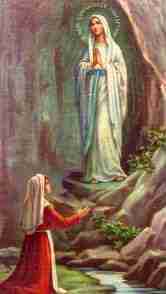
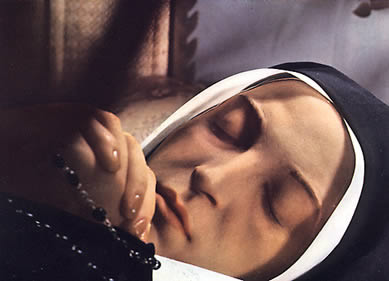
Saint Bernadette remains incorrupt.


OUR LADY OF LOURDES
During the year 1858 our Blessed Lady appeared eighteen times from February 11 to July 16 to Bernadette Soubirous, the fourteen-year-old daughter of a destitute day laborer of Lourdes in France. Through this humble child, the Mother of God announced to the world her sublime title of the Immaculate Conception and a special message of penance and love.
Mary of the Immaculate Conception is the national patron of the Church in the United States of America, and so we should develope a special interest and zeal in helping to fill the treasury of graces that our compassionate Mother distributes so freely for the sick, the poor and the conversion of sinners.
Ave Maria, gratia plena, Dominus tecum.
Benedicta tu in mulieribus
et benedictus fructus ventris tui, Jesus.
Sancta Maria, Mater Dei,
ora pro nobis peccatoribus
nunc et in hora mortis nostrae. Amen.
Description of the Virgin by St. Bernadette

"She has the appearance of a young girl of sixteen or seventeen. She is dressed in a white robe, girdled at the waist with a blue ribbon, which flows down all along her robe. She wears upon her head a veil which is also white; this veil gives just a glimpse of her hair and then falls down at the back below her waist. Her feet are bare but covered by the last folds of her robe except at the point where a yellow rose shines upon each of them. She holds on her right arm a Rosary of white beads with a chain of gold shining like the two roses on her feet."
Messages of Our Lady
Bernadette: "She said to me, 'I do not promise to make you happy in this world, but in the next.'" (February 18, 1858)

Bernadette: "The Lady, looking away from me for a moment, directed her glance afar, above my head. Then, looking down upon me again, for I had asked her what had saddened her, she replied, 'Pray for the sinners.' I was very quickly reassured by the expression of goodness and sweetness which I saw return to her face, and immediately she disappeared." (February 21, 1858)

Bernadette: "Penitence... penitence... penitence!" (February 24, 1858)

Bernadette: "While I was in prayer, the Lady said to me in a serious but friendly voice, 'Go, drink and wash in the fountain.' As I did not know where this fountain was, and as I did not think the matter important, I went toward the Gave. The Lady called me back and signed to me with her finger to go under the grotto to the left; I obeyed but I did not see any water. Not knowing where to get it from, I scratched the earth and the water came. I let it get a little clear of the mud, then I drank and washed." (February 25, 1858)
The Virgin: "Go, and kiss the ground in penance for sinners." "Go and tell the priests to have a chapel built here." (February 27, 1858)
Bernadette (to Abbé Peyramale): "The Lady has ordered me to tell you that she wishes to have a chapel at Massabieille and now she adds 'I wish people to come here in procession.'" (March 2, 1858)
Bernadette (to Abbé Peyramale): "She smiled when I told her that you were asking her to work a miracle. I told her to make the rose bush, which she was standing near, bloom; she smiled once more. But she wants the chapel." (March 3, 1858)
Bernadette: "While I was praying, the thought of asking her name came to my mind with such persistence that I could think of nothing else. I feared to be presumptuous in repeating a question she had always refused to answer and yet something compelled me to speak. At last, under an irresistible impulsion, the words fell from my mouth and I begged the Lady to tell me who she was."
"The Lady did as she had always done before; she bowed her head and smiled, but she did not reply."
"I cannot say why, but I felt myself bolder and asked her again to graciously tell me her name; however, she only smiled and bowed as before, still remaining silent."
"Then once more, for the third time, clasping my hands and confessing myself to be unworthy of the great favor I was asking of her, I again made my request."
"The Lady was standing above the rose bush, in a position very similar to that shown on the Miraculous Medal. At my third request, her face became very serious, and she seemed to bow down in an attitude of humility. Then she joined her hands and raised them to her breast. She looked up to Heaven."
"Then slowly opening her hands and leaning toward me, she said to me in a voice vibrating with emotion: 'I am the Immaculate Conception' (Que soy era Immaculado Conceptiou). She smiled again, spoke no more, and disappeared smiling." (March 25, 1858)
Excerpted from the text 'God Sent', Crossroad, 2000 by Roy Varghese.


The Nineteenth Chapter

The Practices of a Good Religious

THE life of a good religious ought to abound in every virtue so that he is interiorly what to others he appears to be. With good reason there ought to be much more within than appears on the outside, for He who sees within is God, Whom we ought to reverence most highly wherever we are and in Whose sight we ought to walk pure as the angels.

Each day we ought to renew our resolutions and arouse ourselves to fervor as though it were the first day of our religious life. We ought to say: “Help me, O Lord God, in my good resolution and in Your holy service. Grant me now, this very day, to begin perfectly, for thus far I have done nothing.”

As our intention is, so will be our progress; and he who desires perfection must be very diligent.

If the strong-willed man fails frequently, what of the man who makes up his mind seldom or half-heartedly? Many are the ways of failing in our resolutions; even a slight omission of religious practice entails a loss of some kind.

Just men depend on the grace of God rather than on their own wisdom in keeping their resolutions. In Him they confide every undertaking, for man, indeed, proposes but God disposes, and God’s way is not man’s. If a habitual exercise is sometimes omitted out of piety or in the interests of another, it can easily be resumed later. But if it be abandoned carelessly, through weariness or neglect, then the fault is great and will prove hurtful. Much as we try, we still fail too easily in many things. Yet we must always have some fixed purpose, especially against things which beset us the most. Our outward and inward lives alike must be closely watched and well ordered, for both are important to perfection.

If you cannot recollect yourself continuously, do so once a day at least, in the morning or in the evening. In the morning make a resolution and in the evening examine yourself on what you have said this day, what you have done and thought, for in these things perhaps you have often offended God and those about you.

Arm yourself like a man against the devil’s assaults. Curb your appetite and you will more easily curb every inclination of the flesh. Never be completely unoccupied, but read or write or pray or meditate or do something for the common good. Bodily discipline, however, must be undertaken with discretion and is not to be practiced indiscriminately by everyone.

Devotions not common to all are not to be displayed in public, for such personal things are better performed in private. Furthermore, beware of indifference to community prayer through love of your own devotions. If, however, after doing completely and faithfully all you are bound and commanded to do, you then have leisure, use it as personal piety suggests.

Not everyone can have the same devotion. One exactly suits this person, another that. Different exercises, likewise, are suitable for different times, some for feast days and some again for weekdays. In time of temptation we need certain devotions. For days of rest and peace we need others. Some are suitable when we are sad, others when we are joyful in the Lord.

About the time of the principal feasts good devotions ought to be renewed and the intercession of the saints more fervently implored. From one feast day to the next we ought to fix our purpose as though we were then to pass from this world and come to the eternal holyday.

During holy seasons, finally, we ought to prepare ourselves carefully, to live holier lives, and to observe each rule more strictly, as though we were soon to receive from God the reward of our labors. If this end be deferred, let us believe that we are not well prepared and that we are not yet worthy of the great glory that shall in due time be revealed to us. [Rom. 7: 18] Let us try, meanwhile, to prepare ourselves better for death.

“Blessed is the servant,” says Christ, “whom his master, when he cometh, shall find watching. Amen I say to you: he shall make him ruler over all his goods.” [Luke 12:37]

[Imitation of Christ, Book One. Public Domain.]

Friday, February 10, 2006


The Eighteenth Chapter

The Example Set Us by the Holy Fathers

CONSIDER the lively examples set us by the saints, who possessed the light of true perfection and religion, and you will see how little, how nearly nothing, we do. What, alas, is our life, compared with theirs? The saints and friends of Christ served the Lord in hunger and thirst, in cold and nakedness, in work and fatigue, in vigils and fasts, in prayers and holy meditations, in persecutions and many afflictions. How many and severe were the trials they suffered—the Apostles, martyrs, confessors, virgins, and all the rest who willed to follow in the footsteps of Christ! They hated their lives on earth that they might have life in eternity.

How strict and detached were the lives the holy hermits led in the desert! What long and grave temptations they suffered! How often were they beset by the enemy! What frequent and ardent prayers they offered to God! What rigorous fasts they observed! How great their zeal and their love for spiritual perfection! How brave the fight they waged to master their evil habits! What pure and straightforward purpose they showed toward God! By day they labored and by night they spent themselves in long prayers. Even at work they did not cease from mental prayer. They used all their time profitably; every hour seemed too short for serving God, and in the great sweetness of contemplation, they forgot even their bodily needs.

They renounced all riches, dignities, honors, friends, and associates. They desired nothing of the world. They scarcely allowed themselves the necessities of life, and the service of the body, even when necessary, was irksome to them. They were poor in earthly things but rich in grace and virtue. Outwardly destitute, inwardly they were full of grace and divine consolation. Strangers to the world, they were close and intimate friends of God. To themselves they seemed as nothing, and they were despised by the world, but in the eyes of God they were precious and beloved. They lived in true humility and simple obedience; they walked in charity and patience, making progress daily on the pathway of spiritual life and obtaining great favor with God.

They were given as an example for all religious, and their power to stimulate us to perfection ought to be greater than that of the lukewarm to tempt us to laxity.

How great was the fervor of all religious in the beginning of their holy institution! How great their devotion in prayer and their rivalry for virtue! What splendid discipline flourished among them! What great reverence and obedience in all things under the rule of a superior! The footsteps they left behind still bear witness that they indeed were holy and perfect men who fought bravely and conquered the world.

Today, he who is not a transgressor and who can bear patiently the duties which he has taken upon himself is considered great. How lukewarm and negligent we are! We lose our original fervor very quickly and we even become weary of life from laziness! Do not you, who have seen so many examples of the devout, fall asleep in the pursuit of virtue!

[Imitation of Christ, Book One. Public Domain.]

Wednesday, February 08, 2006


The Seventeenth Chapter

Monastic Life

IF YOU wish peace and concord with others, you must learn to break your will in many things.

To live in monasteries or religious communities, to remain there without complaint, and to persevere faithfully till death is no small matter. Blessed indeed is he who there lives a good life and there ends his days in happiness.

If you would persevere in seeking perfection, you must consider yourself a pilgrim, an exile on earth. If you would become a religious, you must be content to seem a fool for the sake of Christ.

Habit and tonsure change a man but little; it is the change of life, the complete mortification of passions that endow a true religious.

He who seeks anything but God alone and the salvation of his soul will find only trouble and grief, and he who does not try to become the least, the servant of all, cannot remain at peace for long.

You have come to serve, not to rule. You must understand, too, that you have been called to suffer and to work, not to idle and gossip away your time. Here men are tried as gold in a furnace. Here no man can remain unless he desires with all his heart to humble himself before God.

[Imitation of Christ, Book One. Public Domain.]
Tuesday, February 07, 2006


LAUS DEO


On the aluminum cap, atop the Washington Monument in Washington DC, are displayed two words: Laus Deo. No one can see these words. In fact, most visitors to the monument are totally unaware they are even there and for that matter, probably couldn't care less.


Once you know Laus Deo's history, you will want to share this with everyone you know. But these words have been there for many years; they are 555 feet, 5.125 inches high, perched atop the monument, facing skyward to the Father of our nation, overlooking the 69 square miles which comprise the District of Columbia, capital of the United States of America. Laus Deo!
Two seemingly insignificant, un-noticed words. Out of sight and, one might think, out of mind, but very meaningfully placed at the highest point over what is the most powerful city in the most successful nation in the world.
So, what do those two words, in Latin, composed of just four syllables and only seven letters, possibly mean? Very simply, they say "Praise be to God!" Though construction of this giant obelisk began in 1848, when James Polk was President of the United States, it was not until 1888 that the monument was inaugurated and opened to the public. It took twenty-five years to finally cap the memorial with a tribute to the Father of our nation, Laus Deo ...... Praise be to God!"
From atop this magnificent granite and marble structure, visitors may take in the beautiful panoramic view of the city with it's division into four major segments. From that vantage point, one can also easily see the original plan of the designer, Pierre Charles l'Enfant...a perfect cross imposed upon the landscape, with the White House to the north. The Jefferson Memorial is to the south, the Capitol to the east and the Lincoln Memorial to the west. A cross you ask ? Why a cross? What about separation of church and state? Yes, a cross; separation of church and state was not, is not, in the Constitution.
So, read on. How interesting and, no doubt, intended to carry a profound meaning for those who bother to notice. Praise be to God! Within the monument itself are 898 steps and 50 landings. As one climbs the steps and pauses at the landings the memorial stones share a message. On the 12th Landing is a prayer offered by the City of Baltimore; on the 20th is a memorial presented by some Chinese Christians; on the 24th a presentation made by Sunday School children from New York and Philadelphia quoting Proverbs 10:7, Luke 18:16 and Proverbs 22:6. Praise be to God!
When the cornerstone of the WashingtonMonumentwas laid on July 4th, 1848 deposited within it were many items including the Holy Bible presented by the Bible Society. Praise be to God! Such was the discipline, the moral direction, and the spiritual mood given by the founder and first President of our unique democracy ."One Nation, Under God." I am awed by Washington's prayer for America. Have you read it? Well, now is your unique opportunity, so read on!
"Almighty God; We make our earnest prayer that Thou wilt keep the United States in Thy holy protection; that Thou wilt incline the hearts of the citizens to cultivate a spirit of subordination and obedience to government; and entertain a brotherly affection and love for one another and for their fellow citizens of the United states at large." And finally that Thou wilt most graciously be pleased to dispose us all to do justice, to love mercy, and to demean ourselves with that charity, humility, and pacific temper of mind which were the characteristics of the Divine Author of our blessed religion, and without a humble imitation of whose example in these things we can never hope to be a happy nation. Grant our supplication, we beseech Thee, through Jesus Christ our Lord. Amen."
Laus Deo! When one stops to observe the inscriptions found in public places all over our nation's capitol, he or she will easily find the signature of God, as it is unmistakably inscribed everywhere you look. You may forget the width and height of "Laus Deo", it's location, or the architects but no one who reads this will be able to forget it's meaning, or these words: "Unless the Lord builds the house its builders labor in vain. Unless the Lord watches over the city, the watchmen stand guard in vain." (Psalm 127: 1)
AUTHOR UNKNOWN


The Sixteenth Chapter

Bearing with the Faults of Others

UNTIL God ordains otherwise, a man ought to bear patiently whatever he cannot correct in himself and in others. Consider it better thus—perhaps to try your patience and to test you, for without such patience and trial your merits are of little account. Nevertheless, under such difficulties you should pray that God will consent to help you bear them calmly.

If, after being admonished once or twice, a person does not amend, do not argue with him but commit the whole matter to God that His will and honor may be furthered in all His servants, for God knows well how to turn evil to good. Try to bear patiently with the defects and infirmities of others, whatever they may be, because you also have many a fault which others must endure.

If you cannot make yourself what you would wish to be, how can you bend others to your will?

We want them to be perfect, yet we do not correct our own faults. We wish them to be severely corrected, yet we will not correct ourselves. Their great liberty displeases us, yet we would not be denied what we ask. We would have them bound by laws, yet we will allow ourselves to be restrained in nothing. Hence, it is clear how seldom we think of others as we do of ourselves.

If all were perfect, what should we have to suffer from others for God’s sake? But God has so ordained, that we may learn to bear with one another’s burdens, for there is no man without fault, no man without burden, no man sufficient to himself nor wise enough. Hence we must support one another, console one another, mutually help, counsel, and advise, for the measure of every man’s virtue is best revealed in time of adversity—adversity that does not weaken a man but rather shows what he is.

[Imitation of Christ, Book One. Public Domain.]

Monday, February 06, 2006


The Fifteenth Chapter

Works Done in Charity

NEVER do evil for anything in the world, or for the love of any man. For one who is in need, however, a good work may at times be purposely left undone or changed for a better one. This is not the omission of a good deed but rather its improvement.

Without charity external work is of no value, but anything done in charity, be it ever so small and trivial, is entirely fruitful inasmuch as God weighs the love with which a man acts rather than the deed itself.

He does much who loves much. He does much who does a thing well. He does well who serves the common good rather than his own interests.

Now, that which seems to be charity is oftentimes really sensuality, for man’s own inclination, his own will, his hope of reward, and his self-interest, are motives seldom absent. On the contrary, he who has true and perfect charity seeks self in nothing, but searches all things for the glory of God. Moreover, he envies no man, because he desires no personal pleasure nor does he wish to rejoice in himself; rather he desires the greater glory of God above all things. He ascribes to man nothing that is good but attributes it wholly to God from Whom all things proceed as from a fountain, and in Whom all the blessed shall rest as their last end and fruition.

If man had but a spark of true charity he would surely sense that all the things of earth are full of vanity!

[Imitation of Christ, Book One. Public Domain.]

Sunday, February 05, 2006


The Fourteenth Chapter

Avoiding Rash Judgment

TURN your attention upon yourself and beware of judging the deeds of other men, for in judging others a man labors vainly, often makes mistakes, and easily sins; whereas, in judging and taking stock of himself he does something that is always profitable.

We frequently judge that things are as we wish them to be, for through personal feeling true perspective is easily lost.

If God were the sole object of our desire, we should not be disturbed so easily by opposition to our opinions. But often something lurks within or happens from without to draw us along with it.
Many, unawares, seek themselves in the things they do. They seem even to enjoy peace of mind when things happen according to their wish and liking, but if otherwise than they desire, they are soon disturbed and saddened. Differences of feeling and opinion often divide friends and acquaintances, even those who are religious and devout.

An old habit is hard to break, and no one is willing to be led farther than he can see.

If you rely more upon your intelligence or industry than upon the virtue of submission to Jesus Christ, you will hardly, and in any case slowly, become an enlightened man. God wants us to be completely subject to Him and, through ardent love, to rise above all human wisdom.

[Imitation of Christ, Book One. Public Domain.]
Saturday, February 04, 2006

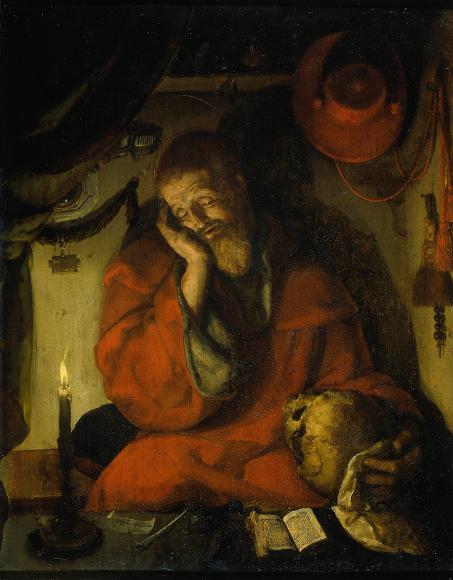
St. Francis of Assisi


The Thirteenth Chapter

Resisting Temptation

SO LONG as we live in this world we cannot escape suffering and temptation. Whence it is written in Job: “The life of man upon earth is a warfare.” [Job 7:1]

Everyone, therefore, must guard against temptation and must watch in prayer lest the devil, who never sleeps but "goes about seeking whom he may devour, find occasion to deceive him." [1 Peter 5:8]

No one is so perfect or so holy but he is sometimes tempted; man cannot be altogether free from temptation.

Yet temptations, though troublesome and severe, are often useful to a man, for in them he is humbled, purified, and instructed.

The saints all passed through many temptations and trials to profit by them, while those who could not resist became reprobate and fell away. There is no state so holy, no place so secret that temptations and trials will not come. Man is never safe from them as long as he lives, for they come from within us—in sin we were born. When one temptation or trial passes, another comes; we shall always have something to suffer because we have lost the state of original blessedness.

Many people try to escape temptations, only to fall more deeply. We cannot conquer simply by fleeing, but by patience and true humility we become stronger than all our enemies. The man who only shuns temptations outwardly and does not uproot them will make little progress; indeed they will quickly return, more violent than before.

Little by little, in patience and long-suffering you will overcome them, by the help of God rather than by severity and your own rash ways. Often take counsel when tempted; and do not be harsh with others who are tempted, but console them as you yourself would wish to be consoled.

The beginning of all temptation lies in a wavering mind and little trust in God, for as a rudderless ship is driven hither and yon by waves, so a careless and irresolute man is tempted in many ways. Fire tempers iron and temptation steels the just. Often we do not know what we can stand, but temptation shows us what we are.

Above all, we must be especially alert against the beginnings of temptation, for the enemy is more easily conquered if he is refused admittance to the mind and is met beyond the threshold when he knocks.

Someone has said very aptly: “Resist the beginnings; remedies come too late, when by long delay the evil has gained strength.” First, a mere thought comes to mind, then strong imagination, followed by pleasure, evil delight, and consent. Thus, because he is not resisted in the beginning, Satan gains full entry. And the longer a man delays in 18 resisting, so much the weaker does he become each day, while the strength of the enemy grows against him.

Some suffer great temptations in the beginning of their conversion, others toward the end, while some are troubled almost constantly throughout their life. Others, again, are tempted but lightly according to the wisdom and justice of Divine Providence Who weighs the status and merit of each and prepares all for the salvation of His elect.

We should not despair, therefore, when we are tempted, but pray to God the more fervently that He may see fit to help us, for according to the word of Paul, He will "make issue with temptation that we may be able to bear it." [1 Cor. 10:13] Let us humble our souls under the hand of God in every trial and temptation for He will save and exalt the humble in spirit.

In temptations and trials the progress of a man is measured; in them opportunity for merit and virtue is made more manifest.

When a man is not troubled it is not hard for him to be fervent and devout, but if he bears up patiently in time of adversity, there is hope for great progress.

Some, guarded against great temptations, are frequently overcome by small ones in order that, humbled by their weakness in small trials, they may not presume on their own strength in great ones.

[Imitation of Christ, Book One. Public Domain.]

Friday, February 03, 2006


The Twelfth Chapter

The Value of Adversity

IT IS good for us to have trials and troubles at times, for they often remind us that we are on probation and ought not to hope in any worldly thing. It is good for us sometimes to suffer contradiction, to be misjudged by men even though we do well and mean well. These things help us to be humble and shield us from vainglory. When to all outward appearances men give us no credit, when they do not think well of us, then we are more inclined to seek God Who sees our hearts. Therefore, a man ought to root himself so firmly in God that he will not need the consolations of men.

When a man of good will is afflicted, tempted, and tormented by evil thoughts, he realizes clearly that his greatest need is God, without Whom he can do no good. Saddened by his miseries and sufferings, he laments and prays. He wearies of living longer and wishes for death that he might be dissolved and be with Christ. Then he understands fully that perfect security and complete peace cannot be found on earth.

[Imitation of Christ, Book One. Public Domain.]

Thursday, February 02, 2006


MORE ABOUT TODAY'S FEAST

This Day was once called 'The Purification of the Blessed Virgin Mary' and as 'Candlemas Day'!

Our Blessed Mother did not find an excuse to avoid fulfilling the precepts of the Mosaic Law, even though she was free from all sin, including Original. Just as she submitted her divine Son to be circumcised according to the Law, she submitted herself in the temple for the ritual of Purification according to the Law.


In many churches throughout the world, candles are brought to Mass, and are blessed by the priest. He then distributes them to the congregation, who in receiving them kiss the candle, which represent Christ, the Light of the world!

During the Gospel reading at Mass, the candles are held by the people lighted!

The priest also blesses the candles, if needed, that are used for tomorrows Feast of Saint Blaise, when everyone can have their throat blessed.

These are beautiful rituals which certainly make our Holy Faith so wonderful!


Feast of The Presentation of Jesus in the Temple

On this day, February 2nd, Mary & Joseph presented Jesus in the temple. The Holy Spirit had revealed to the just and devout Simeon that he should not die before he had seen the Christ of the Lord. In the temple the old man glimpsed Jesus in Mary's arms and blessed God, knowing that at last he had seen the Saviour, "a light of revelation to the Gentiles and a glory of thy people Israel."
But only after the Saviour's Passion and Crucifixion would the light win for men the final victory over bodily and spiritual death. Simeon therefore said to Mary, the co-redeemer of mankind, "Thy own soul a sword shall pierce, that the thoughts of many hearts may be revealed" (Luke 2:35). May we, too, after having shared the redemptive sufferings of Christ attain the final grace of presentation in the temple of God's glory.

[Excerpted from an ancient Daily Missal]

And of course, this is the Fourth Joyful Mystery of the Holy Rosary.

I love meditating on this Mystery cause there is so much to think about. Imagine the faith of Simeon, waiting all those years to see the Savior, and only by inspiration! What if he was wrong, or the inspiration came from the evil one? Some Saints say Simeon was a priest in the temple, maybe retired, and that's why he had access to the inner court. Otherwise, why would the Blessed Mother and St. Joseph hand their prize possession over to a stranger. I wouldn't give my child to some person who just came out of nowhere and started to say some weird things about my child!!!
And the Holy Spirit inspired Simeon to prophesy about Jesus, who He is and why He had come to earth, and about Our Blessed Lady, and her co-redeeming sufferings with her divine Son. Jesus.
And how about Anna, that old woman, who spent her life in the temple. The Holy Spirit enlightened her too, and she began to proclaim things about Our Lord to all those who were passing by.
Yes, there is so much more to meditate on. That's why the Holy Rosary is called a miniature Gospel, and is so powerful a prayer. By meditating on the Mysteries, we become part of that scene as if we were there and we add our prayers to Our Mother Mary's prayers, who unlike us is full of grace and therefore Almighty God is always hearing her petitions for us!

God saves me, Jesus enlightens me, the Holy Spirit is my life, thus I fear nothing.
St. John of the Cross
If we were perfectly dead to ourselves . . . then might we be able to relish things divine.


The Eleventh Chapter

Acquiring Peace and Zeal for Perfection

WE SHOULD enjoy much peace if we did not concern ourselves with what others say and do, for these are no concern of ours. How can a man who meddles in affairs not his own, who seeks strange distractions, and who is little or seldom inwardly recollected, live long in peace?

Blessed are the simple of heart for they shall enjoy peace in abundance.

Why were some of the saints so perfect and so given to contemplation? Because they tried to mortify entirely in themselves all earthly desires, and thus they were able to attach themselves to God with all their heart and freely to concentrate their innermost thoughts.

We are too occupied with our own whims and fancies, too taken up with passing things. Rarely do we completely conquer even one vice, and we are not inflamed with the desire to improve ourselves day by day; hence, we remain cold and indifferent. If we mortified our bodies perfectly and allowed no distractions to enter our minds, we could appreciate divine things and experience something of heavenly contemplation.

The greatest obstacle, indeed, the only obstacle, is that we are not free from passions and lusts, that we do not try to follow the perfect way of the saints. Thus when we encounter some slight difficulty, we are too easily dejected and turn to human consolations. If we tried, however, to stand as brave men in battle, the help of the Lord from heaven would surely sustain us. For He Who gives us the opportunity of fighting for victory, is ready to help those who carry on and trust in His grace.

If we let our progress in religious life depend on the observance of its externals alone, our devotion will quickly come to an end. Let us, then, lay the ax to the root that we may be freed from our passions and thus have peace of mind.

If we were to uproot only one vice each year, we should soon become perfect. The contrary, however, is often the case—we feel that we were better and purer in the first fervor of our conversion than we are after many years in the practice of our faith. Our fervor and progress ought to increase day by day; yet it is now considered noteworthy if a man can retain even a part of his first fervor.

If we did a little violence to ourselves at the start, we should afterwards be able to do all things with ease and joy. It is hard to break old habits, but harder still to go against our will.

If you do not overcome small, trifling things, how will you overcome the more difficult? Resist temptations in the beginning, and unlearn the evil habit lest perhaps, little by little, it lead to a more evil one.

If you but consider what peace a good life will bring to yourself and what joy it will give to others, I think you will be more concerned about your spiritual progress.

[Imitation of Christ, Book One. Public Domain.]

Wednesday, February 01, 2006


The Tenth Chapter

Avoiding Idle Talk

SHUN the gossip of men as much as possible, for discussion of worldly affairs, even though sincere, is a great distraction inasmuch as we are quickly ensnared and captivated by vanity.

Many a time I wish that I had held my peace and had not associated with men. Why, indeed, do we converse and gossip among ourselves when we so seldom part without a troubled conscience? We do so because we seek comfort from one another’s conversation and wish to ease the mind wearied by diverse thoughts. Hence, we talk and think quite fondly of things we like very much or of things we dislike intensely. But, sad to say, we often talk vainly and to no purpose; for this external pleasure effectively bars inward and divine consolation.

Therefore we must watch and pray lest time pass idly.

When the right and opportune moment comes for speaking, say something that will edify.

Bad habits and indifference to spiritual progress do much to remove the guard from the tongue. Devout conversation on spiritual matters, on the contrary, is a great aid to spiritual progress, especially when persons of the same mind and spirit associate together in God.

[Imitation of Christ, Book One. Public Domain.]

Tuesday, January 31, 2006


Chapter Nine

Obedience and Subjection

IT IS a very great thing to obey, to live under a superior and not to be one’s own master, for it is much safer to be subject than it is to command. Many live in obedience more from necessity than from love. Such become discontented and dejected on the slightest pretext; they will never gain peace of mind unless they subject themselves wholeheartedly for the love of God.

Go where you may, you will find no rest except in humble obedience to the rule of authority.

Dreams of happiness expected from change and different places have deceived many.

Everyone, it is true, wishes to do as he pleases and is attracted to those who agree with him. But if God be among us, we must at times give up our opinions for the blessings of peace.

Furthermore, who is so wise that he can have full knowledge of everything? Do not trust too much in your own opinions, but be willing to listen to those of others. If, though your own be good, you accept another’s opinion for love of God, you will gain much more merit; for I have often heard that it is safer to listen to advice and take it than to give it. It may happen, too, that while one’s own opinion may be good, refusal to agree with others when reason and occasion demand it, is a sign of pride and obstinacy.

[Imitation of Christ, Book One. Public Domain.]


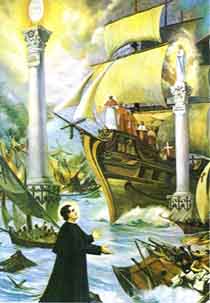
Today is the Feast of St. John Bosco (1815-1888), who grew up on a Piedmont farm in Italy.
His early years were most difficult! While still a student-priest at Turin, he began his mission for the abandoned boy apprentices of the early industrial era, who roamed uncared for on the streets of the city. Priests and Brothers gathered about John Bosco as his work developed and formed the Salesian Order, named in honor of St. Francis of Sales. He also founded a community of Sisters to aid needy girls. He composed pamphlets for the support and defense of the Catholic Faith.
Today, the missionaries of John Bosco carry on his ideals of gentleness and charity among poor children in Asia, Africa, and North and South America, as well as in Europe.


For sixty years St John Bosco received remarkable dreams which were almost visions. Probably his best-known dream vision was that of the Catholic Church like a ship taking refuge between two pillars in the sea. [Picture above]

In May 1862 he shared his experience of this dream.
He could see a very big ship in the sea which he understood as the Catholic Church. There were many smaller ships drawn up to do battle against the big ship, they were the enemies of the Catholic Church and persecutions She would endure.

Two pillars or columns were protruding from the sea a little distant from each other. On the top of one was a statue of Our Lady with 'Help of Christians' written beneath.
On top of the other pillar was a Host beneath which was written 'Salvation of the Faithful.'

The commander of the ship was the Pope. He was directing all his energies to steering the ship between those two columns or pillars. All the enemy ships moved to attack. Sometimes the large ship, the Catholic Church, got large, deep holes in its sides but no sooner was the harm done than a gentle breeze blew from the two columns and the cracks closed up and the gaps were stopped immediately. In a battle the Pope fell gravely wounded. Immediately those who were with him helped him up. [Sounds like Pope John Paul II, when he was shot at the Vatican] A second time the Pope was struck, this time he fell and died. A new Pope was promptly elected [Pope Benedict XVI?] that the enemies begin to lose courage. The new Pope overcame all obstacles and enemies and guided the ship [Catholic Church] right between the two columns. He fastened a chain from the bow of the ship to the column on which stands the Host, and fastened a chain from the ship's stern to the column on which stands a statue of Our Lady. All the ships which had fought against the Pope's ship were scattered and broken to pieces and other smaller ships which had fought for the Pope's ship now bound themselves to the same two columns.
[Reunion of all Christian Churches?]

St. John Bosco is one of my favorite Saints, especially because he worked with children and inspired me to teach Religious Education [CCD] for many years. I felt it was a calling and God's Will and a mandate from the Lord, so wherever I lived, I always volunteered to teach.

Prayer

O God, You made your confessor St. John a father and teacher for the young and willed that he should found in Your Church flourishing new communities under the protection of the Virgin Mary. Enkindle in us the same fire of love to seek after souls and serve You alone. Through Christ Our Lord. Amen.

Monday, January 30, 2006


The Eighth Chapter

Shunning Over-Familiarity

DO NOT open your heart to every man, but discuss your affairs with one who is wise and who fears God. Do not keep company with young people and strangers. Do not fawn upon the rich, and do not be fond of mingling with the great. Associate with the humble and the simple, with the devout and virtuous, and with them speak of edifying things. Be not intimate with any woman, but generally commend all good women to God. Seek only the intimacy of God and of His angels, and avoid the notice of men.We ought to have charity for all men but familiarity with all is not expedient. Sometimes it happens that a person enjoys a good reputation among those who do not know him, but at the same time is held in slight regard by those who do. Frequently we think we are pleasing others by our presence and we begin rather to displease them by the faults they find in us.

[Imitation of Christ, Book One. Public Domain.]

Sunday, January 29, 2006


The Seventh Chapter

Avoiding False Hope and Pride

VAIN is the man who puts his trust in men, in created things.

Do not be ashamed to serve others for the love of Jesus Christ and to seem poor in this world.

Do not be self-sufficient but place your trust in God. Do what lies in your power and God will aid your good will. Put no trust in your own learning nor in the cunning of any man, but rather in the grace of God Who helps the humble and humbles the proud.

If you have wealth, do not glory in it, nor in friends because they are powerful, but in God Who gives all things and Who desires above all to give Himself. Do not boast of personal stature or of physical beauty, qualities which are marred and destroyed by a little sickness. Do not take pride in your talent or ability, lest you displease God to Whom belongs all the natural gifts that you have.

Do not think yourself better than others lest, perhaps, you be accounted worse before God Who knows what is in man. Do not take pride in your good deeds, for God’s judgments differ from those of men and what pleases them often displeases Him. If there is good in you, see more good in others, so that you may remain humble. It does no harm to esteem yourself less than anyone else, but it is very harmful to think yourself better than even one. The humble live in continuous peace, while in the hearts of the proud are envy and frequent anger.

[Imitation of Christ, Book One. Public Domain.]

Saturday, January 28, 2006


The Sixth Chapter

Unbridled Affections

WHEN a man desires a thing too much, he at once becomes ill at ease. A proud and avaricious man never rests, whereas he who is poor and humble of heart lives in a world of peace. An unmortified man is quickly tempted and overcome in small, trifling evils; his spirit is weak, in a measure carnal and inclined to sensual things; he can hardly abstain from earthly desires. Hence it makes him sad to forego them; he is quick to anger if reproved. Yet if he satisfies his desires, remorse of conscience overwhelms him because he followed his passions and they did not lead to the peace he sought.

True peace of heart, then, is found in resisting passions, not in satisfying them. There is no peace in the carnal man, in the man given to vain attractions, but there is peace in the fervent and spiritual man.

[Imitation of Christ, Book One. Public Domain.]

Friday, January 27, 2006


Some thoughts on the coming 'Warning' [Advisio] and the Triumph of the Immaculate Heart, with the reign of Christ in the hearts of all mankind!

I long so deeply for the Warning, especially for Christ's Peace to reign in our hearts. I also long for the re-union of the East & West Catholic Churches and a return to orthodoxy in our worship and Faith! I believe in Garabandal with all my heart & soul cause these apparitions of Our Lady have changed my life 100%. I wouldn't be a deacon today without Our Lady's kissed medal from Garabandal.

I firmly believe in Medjugorje, especially since Our Lady told Fr. Gobbi of the Marian Movement of Priests, that she was appearing there (message #357. In a long message, dated July 3rd, 1987, in paragraph m, She said "Already during this Marian Year, certain great events will take place, concerning what I predicted at Fatima and have told, under secrecy, to the children to whom I am appearing at Medjugorje."

Isn't it wonderful how all Our Lady's apparitions are inter-wined like the seamless garment that Mary wove for the Child Jesus and grew with Him as He aged (Ven. Mary of Agreda, 'City of God'). This is the same garment that the Roman soldiers gambled for at the Crucifixion. Notice how Our Lady's apparitions have grown over the past 100 years, from once a month for one year at Fatima; thousands at Garabandal over 4 years; many thousands to the Medjugorje seers for over 25 Years.

The greatest burst of the supernatural from Almighty God in the history of the world! Surely, God is preparing us for the Reign of Christ and the Triumph of the Immaculate Heart of Mary!!!


The Fifth Chapter

Reading the Holy Scripture

TRUTH, not eloquence, is to be sought in reading the Holy Scriptures; and every part must be read in the spirit in which it was written. For in the Scriptures we ought to seek profit rather than polished diction.

Likewise we ought to read simple and devout books as willingly as learned and profound ones. We ought not to be swayed by the authority of the writer, whether he be a great literary light or an insignificant person, but by the love of simple truth. We ought not to ask who is speaking, but mark what is said. Men pass away, but the truth of the Lord remains forever. God speaks to us in many ways without regard for persons.

Our curiosity often impedes our reading of the Scriptures, when we wish to understand and mull over what we ought simply to read and pass by.

If you would profit from it, therefore, read with humility, simplicity, and faith, and never seek a reputation for being learned. Seek willingly and listen attentively to the words of the saints; do not be displeased with the sayings of the ancients, for they were not made without purpose.

[Imitation of Christ, Book One. Public Domain.]

Wednesday, January 25, 2006


Each month Our Lady, the Queen of Peace, gives a message for the world!

Here is todays Message: January 25, 2006.

"Dear children! Also today I call you to be carriers of the Gospel in your families. Do not forget, little children, to read Sacred Scripture. Put it in a visible place and witness with your life that you believe and live the Word of God. I am close to you with my love and intercede before my Son for each of you. Thank you for having responded to my call." 01/2006

Tuesday, January 24, 2006


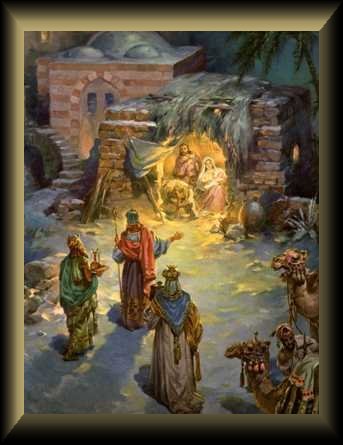
THE WISE MEN

The Fourth Chapter

Prudence in Action


DO NOT yield to every impulse and suggestion but consider things carefully and patiently in the light of God’s will. For very often, sad to say, we are so weak that we believe and speak evil of others rather than good. Perfect men, however, do not readily believe every talebearer, because they know that human frailty is prone to evil and is likely to appear in speech.

Not to act rashly or to cling obstinately to one’s opinion, not to believe everything people say or to spread abroad the gossip one has heard, is great wisdom.

Take counsel with a wise and conscientious man. Seek the advice of your betters in preference to following your own inclinations.

A good life makes a man wise according to God and gives him experience in many things, for the more humble he is and the more subject to God, the wiser and the more at peace he will be in all things.

[Imitation of Christ, Book One. Public Domain.]

The conversion of St. Paul


The Third Chapter

The Doctrine of Truth


HAPPY is he to whom truth manifests itself, not in signs and words that fade, but as it actually is. Our opinions, our senses often deceive us and we discern very little.

What good is much discussion of involved and obscure matters when our ignorance of them will not be held against us on Judgment Day? Neglect of things which are profitable and necessary and undue concern with those which are irrelevant and harmful, are great folly.

We have eyes and do not see.

What, therefore, have we to do with questions of philosophy? He to whom the Eternal Word speaks is free from theorizing. For from this Word are all things and of Him all things speak—the Beginning Who also speaks to us. Without this Word no man understands or judges aright. He to whom it becomes everything, who traces all things to it and who sees all things in it, may ease his heart and remain at peace with God.

O God, You Who are the truth, make me one with You in love everlasting. I am often wearied by the many things I hear and read, but in You is all that I long for. Let the learned be still, let all creatures be silent before You; You alone speak to me.

The more recollected a man is, and the more simple of heart he becomes, the easier he understands sublime things, for he receives the light of knowledge from above. The pure, simple, and steadfast spirit is not distracted by many labors, for he does them all for the honor of God. And since he enjoys interior peace he seeks no selfish end in anything. What, indeed, gives more trouble and affliction than uncontrolled desires of the heart?

A good and devout man arranges in his mind the things he has to do, not according to the whims of evil inclination but according to the dictates of right reason. Who is forced to struggle more than he who tries to master himself? This ought to be our purpose, then: to conquer self, to become stronger each day, to advance in virtue.

Every perfection in this life has some imperfection mixed with it and no learning of ours is without some darkness. Humble knowledge of self is a surer path to God than the ardent pursuit of learning. Not that learning is to be considered evil, or knowledge, which is good in itself and so ordained by God; but a clean conscience and virtuous life ought always to be preferred. Many often err and accomplish little or nothing because they try to become learned rather than to live well.

If men used as much care in uprooting vices and implanting virtues as they do in discussing problems, there would not be so much evil and scandal in the world, or such laxity in religious organizations. On the day of judgment, surely, we shall not be asked what we have read but what we have done; not how well we have spoken but how well we have lived.

Tell me, where now are all the masters and teachers whom you knew so well in life and who were famous for their learning? Others have already taken their places and I know not whether they ever think of their predecessors. During life they seemed to be something; now they are seldom remembered. How quickly the glory of the world passes away! If only their lives had kept pace with their learning, then their study and reading would have been worth while.

How many there are who perish because of vain worldly knowledge and too little care for serving God. They became vain in their own conceits because they chose to be great rather than humble.

He is truly great who has great charity. He is truly great who is little in his own eyes and makes nothing of the highest honor. He is truly wise who looks upon all earthly things as folly that he may gain Christ. He who does God’s will and renounces his own is truly very learned.


[Imitation of Christ, Book One. Public Domain.]

Monday, January 23, 2006


IMITATION OF CHRIST
by Thomas a Kempis


The Second Chapter

Having a Humble Opinion of Self

EVERY man naturally desires knowledge; but what good is knowledge without fear of God? Indeed a humble rustic who serves God is better than a proud intellectual who neglects his soul to study the course of the stars. He who knows himself well becomes mean in his own eyes and is not happy when praised by men.

If I knew all things in the world and had not charity, what would it profit me before God Who will judge me by my deeds?

Shun too great a desire for knowledge, for in it there is much fretting and delusion. Intellectuals like to appear learned and to be called wise. Yet there are many things the knowledge of which does little or no good to the soul, and he who concerns himself about other things than those which lead to salvation is very unwise.

Many words do not satisfy the soul; but a good life eases the mind and a clean conscience inspires great trust in God.

The more you know and the better you understand, the more severely will you be judged, unless your life is also the more holy. Do not be proud, therefore, because of your learning or skill. Rather, fear because of the talent given you. If you think you know many things and understand them well enough, realize at the same time that there is much you do not know. Hence, do not affect wisdom, but admit your ignorance. Why prefer yourself to anyone else when many are more learned, more cultured than you?

If you wish to learn and appreciate something worth while, then love to be unknown and considered as nothing. Truly to know and despise self is the best and most perfect counsel. To think of oneself as nothing, and always to think well and highly of others is the best and most perfect wisdom. Wherefore, if you see another sin openly or commit a serious crime, do not consider yourself better, for you do not know how long you can remain in good estate. All men are frail, but you must admit that none is more frail than yourself.


(Public Domain)

Sunday, January 22, 2006


THE IMITATION OF CHRIST

by Thomas a Kempis


BOOK ONE


THOUGHTS HELPFUL
IN THE LIFE OF THE SOUL


The First Chapter

Imitating Christ and Despising All Vanities on Earth


"HE WHO follows Me, walks not in darkness,"” says the Lord. [John 8:12.] By these words of Christ we are advised to imitate His life and habits, if we wish to be truly enlightened and free from all blindness of heart. Let our chief effort, therefore, be to study the life of Jesus Christ.

The teaching of Christ is more excellent than all the advice of the saints, and he who has His spirit will find in it a hidden manna. Now, there are many who hear the Gospel often but care little for it because they have not the spirit of Christ. Yet whoever wishes to understand fully the words of Christ must try to pattern his whole life on that of Christ.

What good does it do to speak learnedly about the Trinity if, lacking humility, you displease the Trinity? Indeed it is not learning that makes a man holy and just, but a virtuous life makes him pleasing to God. I would rather feel contrition than know how to define it. For what would it profit us to know the whole Bible by heart and the principles of all the philosophers if we live without grace and the love of God? Vanity of vanities and all is vanity, except to love God and serve Him alone.

This is the greatest wisdom--—to seek the kingdom of heaven through contempt of the world. It is vanity, therefore, to seek and trust in riches that perish. It is vanity also to court honor and to be puffed up with pride. It is vanity to follow the lusts of the body and to desire things for which severe punishment later must come. It is vanity to wish for long life and to care little about a well-spent life. It is vanity to be concerned with the present only and not to make provision for things to come. It is vanity to love what passes quickly and not to look ahead where eternal joy abides.

Often recall the proverb: "“The eye is not satisfied with seeing nor the ear filled with hearing." ”[Eccles. 1:8.] Try, moreover, to turn your heart from the love of things visible and bring yourself to things invisible. For they who follow their own evil passions stain their consciences and lose the grace of God.

(Public Domain)
I'm an 'old fashioned Catholic'! I believe in the Bible 100%! When the Old Testament stories are denied, then the New Testament stories are also denied. There are people out there who tell you that the Nativity of Jesus was all made up by the Christians a few hundred years after the Birth of Christ or the miracles were just signs and not true miracles cause God doesn't enter into human history, or the Resurrection was also made up by the Apostles to prove Jesus was God, but He only rose in the spirit (when I heard that, I went nuts!!!). Or some say that the Resurrection and Ascension happened at the same time, dismissing the forty days Our Lord spent on earth appearing to the disciples. Most dioceses in the U.S. have done away with Ascension Thursday as a Holy Day and moved it to the Seventh Sunday of Easter. Little by little the Faith is being watered down. No fasting, no obligations, no sin, no penance. What's next? Ash Wednesday sent to the dust bin?

The Vatican II document 'Dei Verbum' takes special care to vindicate the authenticity of the portrayal of the historic Jesus of Nazareth in the Four Gospels. It emphatically declares that the Church has firmly and with absolute constancy maintained and continues to maintain, that the four Gospels, whose historicity the Church unhesitatingly affirms, faithfully hand on what Jesus, the Son of God, while he lived among us, really did and taught for their salvation, until the day when he was taken up.

Then there are those people who only interpret the Scriptures in "plain sense", a literal interpretation without recourse to Sacred Tradition and the writings and teachings of the Fathers of the Church. They dismiss all the Truths taught to us by the Catholic Church for 2000 years about Our Blessed Mother, especially Her Perpetual Virginity, Her Immaculate Conception, the Miraculous Birth of Jesus, Our Lord; Her freedom from having committed any sin Her whole life; Her Assumption body & soul into Heaven; and Her Coronation as Queen of the Universe and Her many apparitions around the world!

Some say Mother Angelica of EWTN TV is pre-Vatican II. She definitely is not! If anything, she follows the Council documents 100%. Even more than I do!!! Here's one place where we can find the Truth! It is God's television network!

I think people like us should band together and help one another with our strong faith. We are the remnant, who are Our Lady's heel, ready to crush the serpent, that old devil, who is at war with God.

I wish there were more Traditional Parishes to go to, but since we don't (yet), we have to stay together and be faithful to the Holy Father and all the Truths of our beloved Faith.

What say you?

God Bless
Deacon John

Friday, January 06, 2006


THE EPIPHANY OF THE LORD

The mystery of the Christ-birth is a rich and glorious beginning, splendid with promise. Today in many nations and Rites, and Sunday in the U.S., we worship a partial fulfillment when Jesus, as an Infant King, is manifested to wise men of the Gentile world and through them to all peoples. His royalty is neither frightening nor pompous, for the kingly majesty of the sovereign Redeemer is robed in babyhood. Coming in the simplicity of true greatness, Jesus makes Himself acceptable and at home to the little and the great of every nation under heaven.


Homily:

Jesus, the Son of God, was born in Bethlehem approximately 2000 years ago.
This took place at night, in darkness. He was born in a grotto or a stable,
in poverty. There was no great crowd to acclaim the coming into the world of
the Son of the Almighty. There was, of course, Joseph the husband of Mary.
There were also a few shepherds. But the latter had been informed by angels,
they had received a sign from Heaven which allowed them to recognize the Son
of God, who had become like one of us: "To you is born this day in the city
of David a Savior, who is Christ the Lord. And this will be a sign for you:
you will find a babe wrapped in swaddling clothes and lying in a
manger." (Lk. 2:11-12)
God sent his Son to earth to reveal himself in person, at the price of the
bloody sacrifice of Calvary: "For God so loved the world that he gave his
only Son." (Jn. 3:16) God, our Father, loves us with an infinite love in
order to make us his sons and daughters, for his own glory and our eternal
happiness. But if the Father loves us, it is in his Son Jesus that he
lavishes all his love upon us: Jesus is the true and unique Son of the
Father, and we are only his adopted children... It is in Jesus that we are
sons and daughters of the Father. It is Jesus whom the Father loves, in the
Holy Spirit! And this love for his Son is something to which the Father
ceaselessly testifies: never does the Father abandon his Son or any of those
who are united to him through grace and faith!
He was just born, and already the Father testifies to his love for his Son by
sending angels to announce to the shepherds the birth of Christ the Lord. A
short time later, or probably at the same time, the Father informs the magi,
who were perhaps kings, and most probably scientists, that the Lord of the
Universe had just come into this world. In order to do this, the Father uses
the sign of a star, of a celestial body, whose sudden appearance was
undoubtedly corroborated by other signs and prophecies concerning the coming
of the Messiah. "Where is he who has been born king of the Jews? For we
have seen his star in the East, and have come to worship him."
" When Herod the king heard this, he was troubled, and all Jerusalem with him;
and assembling all the chief priests and scribes of the people, he inquired
of them where the Christ was to be born. They told him, 'In Bethlehem of
Judea; for so it is written by the prophet: "And you, O Bethlehem, in the
land of Judah, are by no means least among the rulers of Judah; for from you
shall come a ruler who will govern my people Israel." ' Then Herod summoned
the wise men secretly and ascertained from them what time the star appeared;
and he sent them to Bethlehem, saying, 'Go and search diligently for the
child, and when you have found him bring me word, that I too may come and
worship him.' When they had heard the king they went their way. "
When the magi met with King Herod, he took everything they told him very
seriously. One cannot suspect the magi of being frauds and of having made up
their story: on the contrary, they were very honest people. Moreover,
would God have trusted people who were not in good faith? No. The star that
the magi had seen was truly a sign from God!
Moreover, Jesus himself confirmed it, for he spoke about his second coming, at
the end of time, and then too the stars would be used by the Father to
testify to his love for his beloved Son and to prepare the nations to receive
him, no longer as their Savior, but as their sovereign and eternal Judge:
"There will be signs in sun and moon and stars." (Lk. 21:25)
King Herod would try to bring to ruin the efforts of God the Father to
manifest to the entire world the coming of his beloved Son. Herod tries in
vain to divert this sign of God and use it to destroy the divine plan. But
what can he do against the omnipotence of God? Nothing. Instead, he will
make it possible for the glory of the Lord to be even greater and more
magnificent. For, the simple sign of that star will become a unique jewel, a
rare pearl crimsoned by the blood of innocent martyrs: the children whom
King Herod ordered to be killed in their tens and hundreds!
Herod found out from the magi the exact time the star appeared: "Then Herod
summoned the wise men secretly and ascertained from them what time the star
appeared." And so, by supposing that the star appeared to the magi on the
day of Jesus' birth, Herod was able to determine the approximate age of the
child, and he then ordered the massacre of all the male children of that age:
"He sent and killed all the male children in Bethlehem and in all that region
who were two years old or under, according to the time which he had
ascertained from the wise men." (Mt. 2:16)
" And lo, the star which they had seen in the East went before them, till it
came to rest over the place where the child was. When they saw the star,
they rejoiced exceedingly with great joy. "
Having disengaged themselves from the schemes of King Herod, the magi
continued on their way, following the star of the Lord. Thanks to God, the
magi left far behind them the counsels and intrigues of men, following only
the signs God gave them in order to find the Savior of the Universe! And all
of this fills them with joy! For joy is the fruit of the Holy Spirit, joy is
given to he who listens to and follows the teachings of the Lord.
The magi continued on their way, following the star, just as one may follow
the pole star to direct oneself northwards. This star is their guide,
leading them to the Savior of the world: is it not like that Stella Maris,
that Star of the Sea, who is called Mary, the Mother of Jesus? Indeed, what
is the best and greatest proof of the love of the Father for his Son and for
all men? Is it not the Virgin Mary, the Mother of the Savior of men?
" Going into the house they saw the child with Mary his mother, and they fell
down and worshiped him. Then, opening their treasures, they offered him
gifts, gold and frankincense and myrrh. "
The sign disappeared: it gave way to the reality! Here is no longer the
star, but rather Mary, the Mother of Jesus. It is she who now presents to
the magi her first-born Son: "Going into the house they saw the child with
Mary his mother." The magi thought only of finding Christ, the Messiah, but
they found more: Christ with Mary, his Mother! God testifies to his love
for us by sending us his own Son, but the love of God is boundless and it
urges him to always give us more, much more than we could ever hope for!
Having found Mary and her child, the magi hastened to offer them gifts: gold,
frankincense and myrrh. Perhaps this was their entire fortune? If they had
found the Lord of the Universe, what did it matter now if they were rich or
poor? For the Lord God must be the only wealth that matters in the eyes of
those whom the Father calls to his love! Whoever we are, if the love of the
Father is upon us, what more could we wish for? Let us not hesitate: let us
free ourselves from our riches and our covetousness! For there is more joy
in giving than receiving.
" And being warned in a dream not to return to Herod, they departed to their
own country by another way. "
Once again, God watches over those who love him! God, in his providence, is
there: he provides for all our needs, if weplace our trust in him. The magi
gained all its benefits: they were warned in a dream not to return to Herod,
who, without any doubt, would have had them killed one way or another. Let
us ask Mary, the Mother of Jesus, and the Mother of the Church, to teach us
this gentle confidence in the caring love of the Father who is in Heaven,
with his Son Jesus, in the Glory of the Spirit of Love who unites them!
Canon Dr. Daniel Meynen